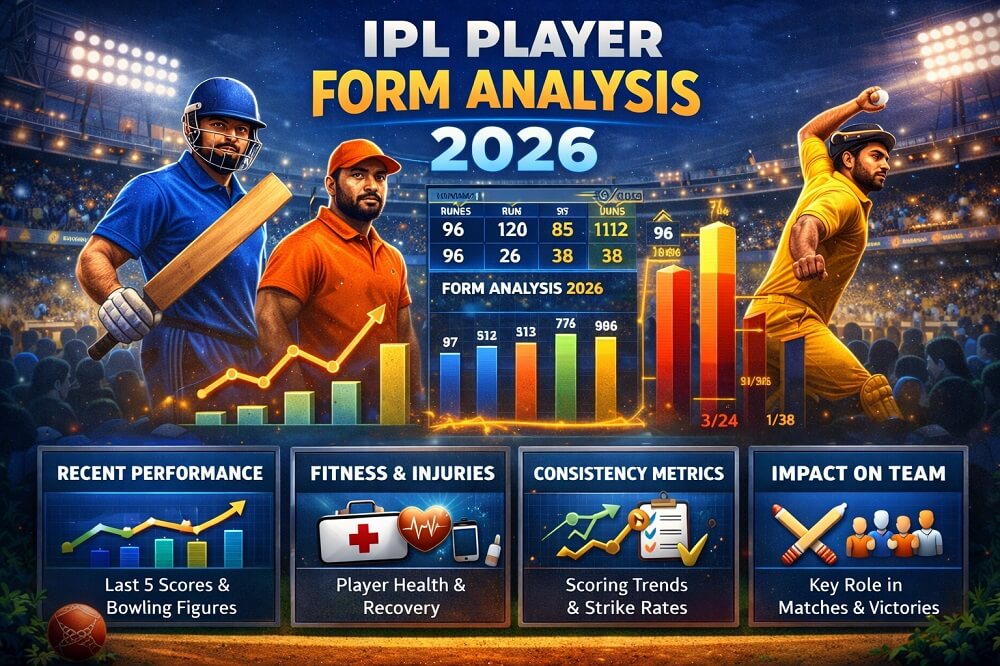
IPL Player Form Analysis 2026: How to Evaluate Recent Performance Trends

In the Indian Premier League (IPL), player form plays a major role in determining match outcomes. While reputation and past records matter, recent performance trends often provide more accurate insight.

T20 cricket is fast-paced, and momentum can change quickly. A player in strong form can influence the game in just a few overs.

This complete guide to IPL 2026 Player Form Analysis explains how to properly evaluate recent performance trends in the Indian Premier League. Learn which key metrics to consider, including batting average, strike rate, bowling economy, consistency, head-to-head records, and venue performance data.

Understanding player form is essential for predicting match outcomes and assessing overall team strength in IPL 2026. Recent match performances, injury updates, and role clarity within the squad all significantly impact team balance and results.

For fans who closely follow stats, match predictions, and performance trends, creating a New IPL betting id can provide a more interactive and strategic way to stay engaged throughout the season.

What Is Player Form?

Player form refers to recent performance levels over a specific period.

It includes:

  • Runs scored in recent matches
  • Strike rate consistency
  • Wickets taken
  • Economy rate for bowlers
  • Fielding contributions
  • Form reflects current confidence and rhythm.
  • Why Recent Form Matters in IPL
  • Unlike longer formats:
  • T20 matches provide limited time for recovery.
  • One impactful innings can change match momentum.
  • Short tournaments increase importance of consistency.
  • Players performing well recently often carry momentum into upcoming games.

How to Evaluate Batting Form

When analyzing batter form, consider:

1️⃣ Runs Scored in Last 5 Matches

Consistency is more important than one big score.

Look for steady contributions rather than isolated performances.

2️⃣ Strike Rate Trends

Strike rate reflects scoring efficiency.

In T20 cricket:

  • Strike rate above 130 is generally positive.
  • Higher strike rates indicate aggressive impact.
  • Consistency in scoring speed matters.

3️⃣ Boundary Percentage

Players hitting more boundaries:

  • Contribute to faster scoring.
  • Influence powerplay and death overs.
  • Boundary frequency shows attacking intent.

4️⃣ Performance by Venue

Some players perform better at specific stadiums.

Venue familiarity can enhance confidence and output.

How to Evaluate Bowling Form

For bowlers, analyze:

1️⃣ Wickets in Recent Matches

Regular wicket-taking indicates rhythm and confidence.

2️⃣ Economy Rate

Lower economy rate reflects control over scoring.

In T20 format, economy is as important as wickets.

3️⃣ Overs During Which Wickets Occur

Wickets in powerplay or death overs often have greater impact.

Timing matters in performance evaluation.

Role of Consistency

Consistency is key indicator of reliability.

A player scoring:

  • 35, 42, 28, 50, 37 is more consistent than someone scoring
  • 5, 90, 10, 3, 70.
  • Steady contributions help team stability.

Form vs Reputation

Reputation is based on long-term career performance.

Form focuses on current performance level.

In IPL, recent form often outweighs historical reputation.

Teams prioritize players currently performing well.

Psychological Aspect of Form

Players in good form:

  • Feel confident.
  • Make clearer decisions.
  • Play more freely.
  • Players struggling with form:
  • May feel pressure.
  • Become cautious.
  • May overthink situations.
  • Confidence influences execution.

Impact of Form on Team Strategy

Captains often:

  • Promote in-form players in batting order.
  • Give more overs to in-form bowlers.
  • Adjust field placements accordingly.
  • Form influences tactical decisions significantly.

Read More: IPL Auction Strategy Impact 2026

Venue Interaction with Form

Form combined with venue knowledge increases reliability.

For example:

  • Batter in good form at high-scoring venue → stronger probability of impact.
  • Bowler in form at spin-friendly ground → greater effectiveness.
  • Form should always be analyzed with environmental context.

Role of Momentum in IPL

Momentum plays large role in T20 cricket.

A player scoring consistently:

  • Builds rhythm.
  • Adapts quickly to conditions.
  • Gains mental advantage.
  • Momentum can carry through several matches.

How to Track Player Form

To evaluate effectively:

  1. Review last 5–7 matches.
  2. Analyze strike rate and economy.
  3. Check consistency patterns.
  4. Consider opposition strength.
  5. Observe match situations during performance.
  6. Data-based review improves assessment quality.

Common Mistakes in Form Analysis

❌ Judging based on one match only
❌ Ignoring strike rate
❌ Overlooking venue context
❌ Focusing only on total runs

Form evaluation requires comprehensive review.

Example Scenario

Batter A:

  • Last 5 matches: 45, 52, 39, 48, 41.
  • Strike rate consistently above 135.
  • This indicates strong form.
  • Even without century, player is reliable contributor.

Form in Powerplay Phase

Openers in good form:

  • Attack confidently.
  • Reduce pressure on middle order.
  • Build strong platform.
  • Form in early overs often sets match tone.

Form in Middle Overs

In middle overs:

  • Stable batters maintain scoring flow.
  • In-form bowlers control run rate.
  • Consistency during overs 7–15 is critical.

Form in Death Overs

Finishers in form:

  • Increase boundary percentage.
  • Handle pressure situations.
  • Accelerate effectively.
  • Death overs performance often depends on confidence level.

Long-Term Form Trends

Across IPL seasons:

  • Teams with multiple in-form players perform better.
  • Momentum during tournament influences playoff qualification.
  • Sustained form leads to consistent results.
  • Form stability correlates with team success.

Balancing Form with Other Factors

While form is important, also consider:

  • Pitch conditions.
  • Matchups.
  • Team combination.
  • Venue trends.
  • Weather impact.
  • Comprehensive analysis improves clarity.

Responsible Perspective

Even players in excellent form:

  • Can fail in single match.
  • May face challenging conditions.
  • Can be dismissed unexpectedly.
  • Form increases probability but does not guarantee outcome.

Frequently Asked Questions (FAQ)

1. How many matches should I check for form analysis?

Generally, last 5–7 matches provide useful trend insight.

2. Is one big score enough to judge form?

No. Consistency over multiple matches is more reliable.

3. Does venue affect player form?

Yes. Some players perform better at specific stadiums.

4. Is strike rate important in form evaluation?

Yes. In T20 cricket, strike rate indicates scoring efficiency.

5. Can form change quickly?

Yes. Momentum can shift rapidly in short formats like IPL.

Final Conclusion

Player form analysis is a crucial element of IPL 2026 evaluation.

By reviewing:

✔ Recent performances
✔ Strike rate trends
✔ Economy consistency
✔ Venue influence
✔ Match situations

you gain better understanding of current momentum.

Form reflects confidence, rhythm, and reliability.

In T20 cricket, current performance often matters more than past reputation.
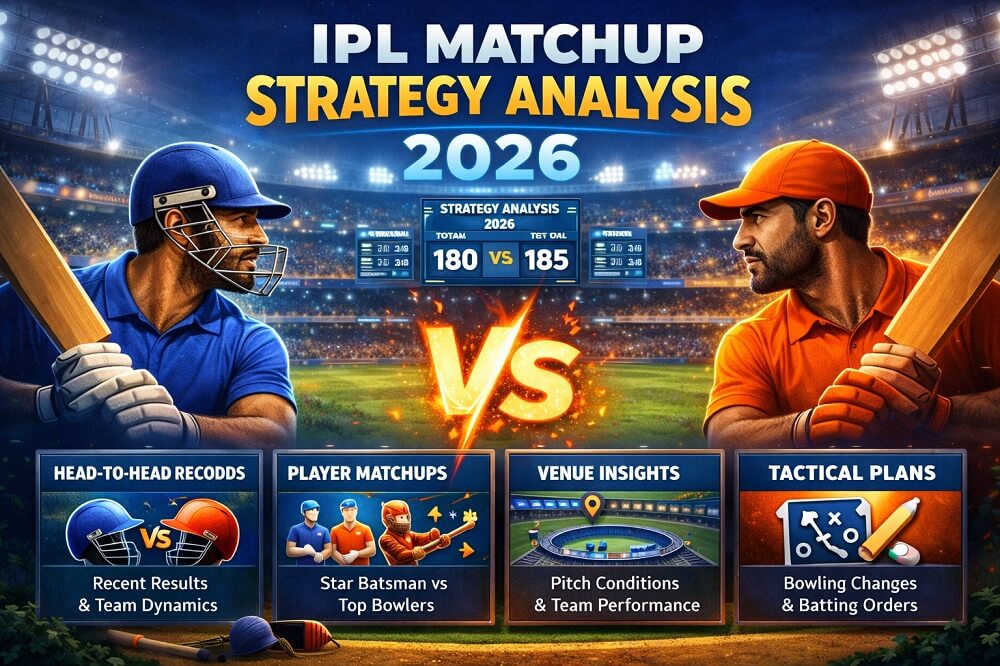
IPL Matchup Strategy Analysis 2026

Batter vs Bowler Data Study for Smarter Match Understanding

In modern IPL cricket, matchups play a crucial role in determining outcomes. Instead of relying only on overall form, teams now analyze specific batter vs bowler statistics to gain tactical advantage.

Matchup strategy refers to using data to decide which bowler should face which batter in key moments of the match.

In IPL 2026, advanced analytics and detailed performance tracking will play a crucial role in shaping team strategies across the Indian Premier League. Matchup planning, player-vs-player statistics, venue records, and real-time data analysis are becoming essential tools for franchises aiming to gain a competitive edge.

With teams focusing on data-driven decisions, fans are also becoming more analytical in their approach. From studying head-to-head records to evaluating player form and pitch conditions, strategic insights are influencing every aspect of the tournament. For users looking to stay ahead with match predictions and real-time updates, having a trusted IPL betting id can enhance engagement and provide a more strategic viewing experience throughout the season.

This guide explains how matchup analysis works and why it is important in T20 cricket.

What Is Matchup Strategy?

Matchup strategy is the tactical use of data to identify favorable or unfavorable player confrontations.

For example:

  • A batter who struggles against left-arm spin.
  • A bowler who consistently dismisses a particular top-order player.
  • Captains use these insights to plan bowling changes and field placements.

Why Matchups Matter in T20 Format

T20 cricket is short and intense.

Key reasons matchups are important:

✔ Limited overs mean fewer recovery opportunities.
✔ One over can change momentum.
✔ Exploiting weaknesses quickly creates advantage.
✔ Data-driven decisions reduce guesswork.

Since each ball is valuable, matchup planning increases efficiency.

Common Matchup Types in IPL

1️⃣ Batter vs Spin Matchups

Many batters have:

  • Strong performance against pace.
  • Weaker record against spin.

Captains introduce spinners during middle overs to exploit this tendency.

Spin-based matchup strategy is especially effective on slow pitches.

2️⃣ Batter vs Pace Matchups

Some batters:

  • Struggle with short balls.
  • Face difficulty against swing bowling.
  • New-ball bowlers often target these weaknesses during powerplay.

Pace matchups are critical in early overs.

3️⃣ Left-Arm vs Right-Hand Strategy

Left-right combinations can disrupt bowling rhythm.

Teams frequently use:

  • Right-hand batter against left-arm spin.
  • Strategic rotation to avoid predictable matchups.
  • Matchup flexibility improves scoring flow.

Data Usage in Matchups

Modern IPL teams analyze:

  • Strike rate against specific bowlers.
  • Dismissal patterns.
  • Venue-specific records.
  • Recent form trends.

This helps in making informed tactical decisions.

Analytics plays a bigger role than ever before.

Captain’s Role in Matchup Execution

Captains decide:

  • When to introduce specific bowlers.
  • How to adjust field placements.
  • Whether to continue attacking or defend.
  • Strong captains use matchup data effectively.

Poor execution can neutralize strategic advantage.

Read More: IPL Auction Strategy Impact

Matchups in Powerplay

During first six overs:

  • Fast bowlers target weaker batters.
  • Field restrictions increase attacking opportunities.

Matchups here can set tone for entire innings.

Early wickets through matchup planning are common.

Matchups in Middle Overs

Middle overs rely heavily on:

  • Spin vs weak spin batters.
  • Matchup-based bowling rotations.
  • Teams aim to break partnerships using favorable confrontations.

This phase is often decided by matchup quality.

Matchups in Death Overs

In final overs:

  • Bowlers with proven death records face power hitters.
  • Yorkers and slower balls used strategically.
  • Some batters excel against specific bowling styles in death phase.

Correct matchup selection prevents large finishing totals.

Venue Influence on Matchups

Venue conditions affect matchup strength.

For example:

  • Spin-friendly pitch increases spin matchups.
  • Flat pitch reduces impact of bowling weaknesses.
  • Matchups must always be evaluated with pitch context.

Psychological Effect of Matchups

When a batter knows:

  • A bowler has historically dismissed them often.
  • Pressure may increase.

Similarly, bowlers gain confidence facing favorable opponents.

Mental aspect enhances tactical advantage.

Example Scenario

Batter A:

  • Strike rate 140 overall.
  • Strike rate 90 against left-arm spin.
  • Bowling team introduces left-arm spinner during middle overs.

This increases dismissal probability.

Matchup data creates strategic edge.

Limitations of Matchup Strategy

While powerful, matchup planning has limitations:

❌ Small sample size may mislead decisions.
❌ Player form can change over time.
❌ Conditions may override historical trends.

Matchups should complement overall strategy — not replace it.

Matchup Strategy in IPL 2026

With advanced analytics:

  • Teams track detailed performance metrics.
  • Technology assists decision-making.
  • Real-time data influences bowling changes.
  • Matchup awareness is now standard in professional cricket.

Role of All-Rounders in Matchups

All-rounders increase matchup flexibility because they:

  • Offer bowling variety.
  • Add batting depth.
  • Provide tactical adaptability.
  • Teams with versatile players can adjust matchups dynamically.

Impact on Tournament Success

Consistent use of matchup strategy:

  • Improves bowling efficiency.
  • Increases wicket-taking opportunities.
  • Reduces opposition scoring rate.
  • Top-performing teams often excel in matchup execution.

Common Matchup Mistakes

❌ Over-reliance on outdated statistics
❌ Ignoring current form
❌ Failing to adjust during match
❌ Using predictable patterns repeatedly

Matchups require constant adaptation.

How to Analyze Matchups Before Match

  1. Review batter strike rate vs bowling type.
  2. Check dismissal history.
  3. Evaluate venue impact.
  4. Consider current form.
  5. Observe captain tendencies.
  6. Preparation enhances tactical clarity.

Long-Term Insight

Across IPL seasons:

  • Teams using matchup strategies effectively show improved consistency.
  • Tactical flexibility increases win probability.
  • Adaptation separates top teams from average teams.
  • Matchup analysis is now core part of professional cricket planning.

Responsible Analytical Reminder

While matchups improve strategy:

  • Cricket remains unpredictable.
  • One exceptional performance can override data.
  • Conditions may change quickly.
  • Use matchup insights as part of broader evaluation.

Final Conclusion

Matchup strategy is one of the most advanced tactical elements in IPL 2026.

By analyzing:

✔ Batter weaknesses
✔ Bowling strengths
✔ Venue conditions
✔ Pitch behavior

teams can optimize performance across all phases.

Modern IPL success depends not only on talent — but on intelligent matchup execution.

Frequently Asked Questions (FAQ)

1. What is matchup strategy in IPL?

It is the use of data to plan batter vs bowler confrontations strategically.

2. Why are matchups important in T20 cricket?

Because limited overs make each confrontation highly impactful.

3. Do captains use matchup data?

Yes, modern teams rely heavily on analytics for decision-making.

4. Are matchups more important in certain phases?

Yes, especially during powerplay and middle overs.

5. Can matchups guarantee success?

No, they improve probability but do not guarantee outcomes.

IPL Auction Strategy Impact 2026

How Squad Building Shapes Season Performance

The Indian Premier League (IPL) is not only won on the field — it is often built in the auction room.

Before the tournament begins, franchises participate in the IPL auction to select players, balance squads, and allocate budgets strategically. These decisions directly impact season performance.

A well-planned auction strategy in the Indian Premier League (IPL) can create a championship-winning team. Poor planning can lead to imbalance and inconsistency. For fans and analysts tracking team combinations, player form, and match outcomes, staying updated with the right IPL betting id platform can also enhance engagement and strategic insights throughout the season.

This guide explains how auction strategy influences IPL 2026 performance and why squad composition matters across an entire season.

Why IPL Auction Is So Important

The auction determines:

  • Team balance
  • Role clarity
  • Squad depth
  • Budget distribution
  • Overseas player selection

Since IPL is a short tournament, there is limited time to correct mistakes after auction.

Smart planning before season begins creates competitive advantage.

Core Elements of Auction Strategy

1️⃣ Budget Allocation

Teams must decide how to distribute funds:

  • Spend heavily on marquee players?
  • Or build balanced squad with multiple strong performers?
  • Over-investing in one player may reduce squad depth.

Balanced spending often produces stronger overall performance.

2️⃣ Role-Based Selection

Successful teams select players based on:

  • Powerplay specialists
  • Middle-order anchors
  • Finishers
  • Death bowlers
  • Spin options
  • Each phase of match requires specific skill sets.

Ignoring role clarity leads to imbalance.

3️⃣ Overseas Player Strategy

Teams can include limited foreign players in playing XI.

Auction planning must consider:

  • Availability of international stars
  • Pitch compatibility
  • Squad flexibility

Selecting overseas players strategically improves team adaptability.

Impact of Auction on Powerplay Performance

If auction prioritizes:

  • Aggressive openers
  • Swing bowlers

Team powerplay effectiveness improves.

Early overs often set match momentum.

Auction decisions directly affect this phase.

Impact on Middle Overs

Auction strategy determines:

  • Spin depth
  • Anchor presence
  • All-round flexibility

Teams investing in quality spinners perform better in spin-friendly venues.

Balanced squad helps control overs 7–15 effectively.

Impact on Death Overs

Death overs require:

  • Specialist bowlers
  • Experienced finishers

Teams that invest in death-over specialists during auction gain advantage in close matches.

Final overs often decide tournament outcomes.

Role of All-Rounders in Auction Planning

All-rounders provide:

  • Dual skill value
  • Flexibility in XI selection
  • Depth in both departments

Franchises often prioritize versatile players during auction.

They increase tactical options across season.

Auction Strategy and Squad Depth

Depth is critical in long tournaments.

Teams must prepare for:

  • Injuries
  • Form fluctuations
  • Player workload
  • International commitments

Auction planning must account for backup options.

Strong bench strength improves consistency.

Influence on Team Chemistry

Auction is not only about individual talent.

It also impacts:

  • Role clarity
  • Team balance
  • Communication
  • Dressing room environment

A well-structured squad enhances harmony and performance.

Data-Driven Auction Trends

Modern IPL franchises use:

  • Performance analytics
  • Match-up data
  • Venue statistics
  • Player consistency metrics

Auction decisions are increasingly based on data rather than reputation alone.

This analytical shift improves long-term success.

Auction Impact on Season Consistency

Teams with smart auction strategy tend to:

  • Maintain stable performance.
  • Avoid extreme fluctuations.
  • Qualify consistently for playoffs.
  • Poor auction planning may result in:
  • Weak bowling depth.
  • Overloaded batting lineup.
  • Limited flexibility.

Balanced teams perform better across different venues.

Read More: IPL 2026 Betting Guide

Auction Strategy and Playoff Success

Championship-winning teams often share:

  • Strong squad balance.
  • Defined roles.
  • Quality finishers.
  • Reliable death bowlers.

Auction decisions made months before season often shape playoff destiny.

Common Auction Mistakes

❌ Overspending on one superstar
❌ Ignoring bench strength
❌ Not considering venue compatibility
❌ Weak death bowling investment
❌ Lack of all-rounders

Avoiding these mistakes increases long-term stability.

Example Auction Strategy Scenario

Team A:

  • Balanced spending
  • Strong spin attack
  • Reliable finishers
  • Good all-rounders

Team B:

  • Heavy spending on top-order
  • Weak bowling depth

Over season, Team A likely performs more consistently.

Balance often beats star concentration.

Auction Strategy in IPL 2026 Context

With increasing competition:

  • Every team studies analytics deeply.
  • Budget management is more precise.
  • Talent scouting has expanded globally.

Auction strategy will continue to influence team strength.

Long-Term Strategic Insight

Auction planning impacts:

✔ Powerplay structure
✔ Middle overs control
✔ Death overs execution
✔ Injury resilience
✔ Squad adaptability

Strong auction strategy builds foundation for entire season.

Responsible Analytical Perspective

While auction builds squad:

  • On-field performance determines results.
  • Unexpected breakthroughs occur.
  • Young players can outperform expectations.
  • Auction improves probability — not guarantees.

Final Conclusion

IPL auction strategy is one of the most important factors influencing season performance in 2026.

Smart franchises:

✔ Allocate budget wisely
✔ Build balanced squads
✔ Prioritize role clarity
✔ Ensure depth across departments

Auction decisions shape team structure before first ball is bowled.

A well-executed auction often reflects in consistent performance throughout tournament.

Frequently Asked Questions (FAQ)

1. Why is IPL auction important?

Because it determines squad composition before the season begins.

2. Does auction strategy affect playoff qualification?

Yes. Strong squad balance improves chances of consistent wins.

3. Should teams focus on stars or balance?

Balanced squads generally perform better across venues.

4. How do all-rounders help in auction planning?

They provide flexibility in both batting and bowling departments.

5. Is auction enough to win IPL?

No. On-field performance, execution, and adaptability also matter.


play99exch