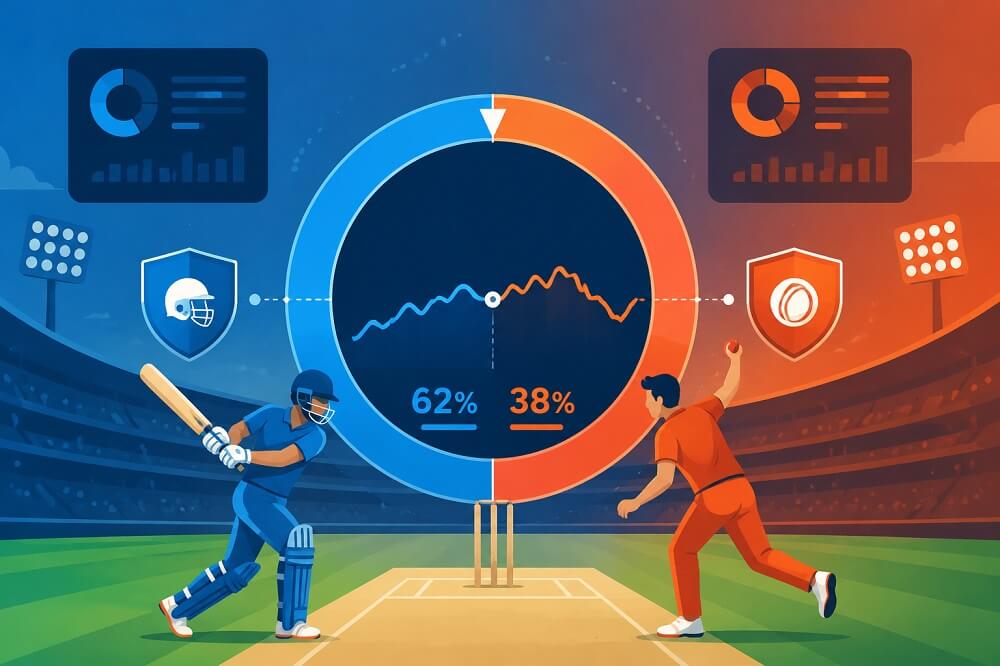
World Cup 2027 Schedule: Date, Time & How to Watch the Launch

Cricket fans around the world can now follow the official world cup 2027 schedule announcement as the ICC prepares to reveal the groups and full fixture list for the next men’s ODI World Cup.

The ICC Men’s Cricket World Cup 2027 will be hosted by South Africa, Zimbabwe and Namibia, with 14 teams set to compete across 12 venues. The tournament will feature a new three-stage format and is scheduled to begin on 2 October 2027, with the final scheduled for 21 November 2027.

For fans planning their viewing schedules, following their favourite teams or considering travelling to matches, the Cricket World Cup 2027 Schedule Launch is an important event. Cricket followers looking for additional sports-related information can also explore play99exch. Here is how to watch the schedule launch and what to expect.

When Is the Cricket World Cup 2027 Schedule Launch?

The official ICC World Cup 2027 schedule announcement is taking place on Thursday, 1 October 2026.

According to the ICC, the Schedule Launch programme begins at 5:30 PM South Africa Standard Time (SAST). That is 9:00 PM Indian Standard Time (IST). The launch is being held in Cape Town at the Zeitz Museum of Contemporary Art Africa (Zeitz MOCAA).

The event will reveal the groups and the full match schedule for the 2027 tournament.

The announcement is particularly significant because the 2027 World Cup has a different competition structure from the 2023 edition. The ICC has confirmed a 14-team tournament with three stages before the semi-finals and final.

Where to Watch the Cricket World Cup 2027 Schedule Launch

The ICC has confirmed several broadcasters and platforms for the Schedule Launch Show.

For fans looking for the easiest international option, the ICC’s official YouTube channel will carry the programme globally.

Here are the confirmed viewing options by territory:

  • Global: ICC YouTube
  • South Africa and Sub-Saharan Africa: SuperSport
  • India: JioHotstar and Star Sports channels
  • Australia: Amazon Prime Video, available on demand
  • United Kingdom: Sky Sports Cricket
  • USA and Canada: Willow TV
  • Caribbean: ESPN Caribbean and Disney+
  • Middle East and North Africa: StarzPlay Cricket
  • Sri Lanka: DTV and Dialog Play App
  • Pakistan: PTV, Myco, Geo Super and Tamasha

Broadcast availability can vary by territory, so fans should check their local broadcaster’s listings close to the event.

Watch Through the Official ICC Channels

If you are unsure which broadcaster applies to your country, the ICC’s official digital channels are a useful place to start. The ICC has specifically confirmed its YouTube channel as a global option for the Schedule Launch Show.

What Will Be Revealed During the Schedule Launch?

The main purpose of the event is to reveal the Cricket World Cup 2027 fixtures and tournament groups.

Fans can expect information covering:

  • Group allocations
  • Match dates
  • Full fixture schedule
  • Venues
  • Host cities
  • Opening matches
  • Key group-stage fixtures
  • Super 7 stage details
  • Semi-final arrangements
  • Final details

The ICC has already confirmed that the tournament will feature 57 matches across 12 venues, although the complete fixture timetable is being unveiled through the official schedule announcement.

The event will also provide fans with a clearer picture of how the new tournament format will work.

How Will the World Cup 2027 Format Work?

The ICC Cricket World Cup 2027 will feature 14 teams and three stages before the semi-finals.

The tournament starts with a Super Series involving the three lowest-ranked of the 14 qualified teams. Those three teams will play a round-robin competition, with the winner advancing to the next stage.

The next round will involve 12 teams split into two groups of six. After the group matches, seven teams will progress to the Super 7 stage.

The Super 7 will consist of 21 round-robin matches. The top four teams will then advance to the semi-finals, followed by the final.

That format makes the schedule announcement especially important because fans will be able to see how the different stages fit together.

Cricket World Cup 2027 Host Countries

The next Cricket World Cup will return to Africa, with South Africa, Zimbabwe and Namibia serving as co-hosts.

The ICC has confirmed 12 venues across the three countries. Eight venues are in South Africa, three are in Zimbabwe and one is in Namibia.

The confirmed venues include:

South Africa

  • Wanderers Stadium, Johannesburg
  • Centurion, Tshwane
  • Newlands Cricket Ground, Cape Town
  • Kingsmead Cricket Ground, Durban
  • St George’s Park, Gqeberha
  • Mangaung Oval, Bloemfontein
  • Boland Park, Paarl
  • Buffalo Park, KuGompo City

Zimbabwe: Three venues have been confirmed in Zimbabwe as part of the 12-venue tournament.

Namibia: Namibia’s capital, Windhoek, will host matches and will also stage the opening Super Series.

The World Cup’s return to Africa is one of the major features of the 2027 tournament. It will be the first men’s Cricket World Cup on African soil since 2003.

Cricket World Cup 2027 Teams

The 2027 tournament will feature 14 teams.

The ICC has confirmed that the tournament’s expanded field will consist of 14 qualified teams, with the competition structure designed around those 14 places.

Not every participating team should be treated as confirmed simply because it is expected to qualify. Qualification and ranking pathways determine the final field, so fans should rely on official ICC announcements for the definitive list.

The schedule launch will therefore be an important moment for understanding not only the fixtures but also the eventual tournament groups.

Cricket World Cup 2027 Dates and Timetable

The tournament is scheduled to begin on 2 October 2027 in Windhoek with the Super Series.

The final is scheduled for 21 November 2027.

The complete World Cup 2027 schedule time table will provide the exact dates and locations for individual matches.

For fans, this information will make it easier to plan around:

  • International time zones
  • Team-specific fixtures
  • Travel arrangements
  • Ticket applications
  • Match-day accommodation
  • Television and streaming schedules

The official fixture list should be treated as the primary reference because schedules can contain important venue and timing details that may not be available in general tournament announcements.

How to Follow the Schedule Announcement Online

If you want to stay updated with the Next Cricket World Cup 2027, follow these simple steps.

1. Visit the Official ICC Website

Check the ICC’s official Cricket World Cup 2027 section for announcements, fixtures, news and updates.

ICC Men’s Cricket World Cup 2027

2. Watch the Official ICC YouTube Broadcast

The ICC has confirmed that the Schedule Launch Show will be available globally through its YouTube channel.

3. Check Your Local Broadcaster

Depending on your country, the schedule launch may also be available through services such as Sky Sports, Willow TV, JioHotstar, SuperSport or other confirmed regional partners.

4. Follow Official ICC Social Channels

Following the ICC’s official social media accounts can help you receive schedule announcements, fixture graphics and tournament updates as they are released.

5. Save the Official Fixture Page

Once the world cup 2027 schedule is published, bookmark the official ICC schedule page so you have a reliable reference for match dates, venues and times.

What Happens After the Schedule Is Released?

The schedule announcement is only the beginning of the planning process for many fans.

Once the official fixtures are available, supporters can use them to plan which matches they want to watch and where they may want to travel.

Match Viewing

Fans can identify their team’s group-stage fixtures and convert match times to their local time zone.

Travel

Supporters travelling to South Africa, Zimbabwe or Namibia can use the official venue information to plan flights, accommodation and local transportation.

Tickets

The ICC has announced a ticket ballot for the 2027 tournament. The ballot opened on 1 October 2026, alongside the official schedule announcement. Entry is free and is not first-come, first-served; valid entries submitted between 1 October and 21 November 2026 will be considered equally.

Venue Visits

With 12 venues spread across three countries, the final schedule will help travelling supporters determine which matches can realistically be combined into a single trip.

Conclusion

The world cup 2027 schedule launch gives cricket fans the information they need to start planning for the next major ODI World Cup. The tournament will be hosted by South Africa, Zimbabwe and Namibia, feature 14 teams, and use a new three-stage competition format. Fans looking for additional sports-related information may also come across an online betting ID while exploring online sports platforms.

FAQs

When will the Cricket World Cup 2027 schedule be announced?

The official schedule launch is taking place on 1 October 2026, with the Schedule Launch Show beginning at 5:30 PM SAST.

Where can I watch the Cricket World Cup 2027 schedule launch?

The ICC has confirmed a global live stream through ICC YouTube. Regional broadcasters including SuperSport, JioStar, Sky Sports and Willow TV also have confirmed coverage for specific territories.

Who is hosting the Cricket World Cup 2027?

The ICC Men’s Cricket World Cup 2027 will be co-hosted by South Africa, Zimbabwe and Namibia.

When will the Cricket World Cup 2027 begin?

The tournament is scheduled to begin on 2 October 2027, with the Super Series taking place in Windhoek.

When is the Cricket World Cup 2027 final?

The final is scheduled for 21 November 2027.

Where can I find the official Cricket World Cup 2027 fixtures?

The official ICC website is the most reliable place to check the Cricket World Cup 2027 fixtures once they are released.

Official ICC Cricket World Cup 2027 page

How many teams will play in the Cricket World Cup 2027?

The 2027 men’s World Cup will feature 14 teams. The tournament will use a new three-stage format before the semi-finals and final.

How many venues will host World Cup 2027 matches?

The ICC has confirmed 12 venues across South Africa, Zimbabwe and Namibia.

10 Smart Cricket Betting Strategies in 2026: A Practical Guide

This guide covers 10 smart cricket betting strategies to help bettors make more informed decisions. It explains how to analyze team and player form, pitch and weather conditions, manage your bankroll, identify value bets, use live betting wisely, and track results. Staying updated with cricket news and avoiding emotional decisions can help create a more disciplined and responsible betting approach.

Many beginners assume that cricket betting is purely based on luck. However, experienced bettors know that successful betting requires strategy, research, and discipline. Using smart betting strategies can significantly increase your chances of making better predictions.

Cricket betting is popular among fans who enjoy predicting match outcomes while using their knowledge of the game. Instead of relying on luck, smart strategies like analyzing team form, pitch conditions, and managing your bankroll can help improve your chances of success.

Many bettors start by creating a play99exch new id to access various cricket betting markets and real-time odds. In this article, we’ll explore 10 smart cricket betting strategies for consistent wins to help you bet more wisely and confidently.

Below are ten effective strategies used by experienced cricket bettors.

10 Smart Cricket Betting Strategies for 2026

1. Study Team Performance

Analyze recent team performances, including wins, losses, and player contributions.

2. Follow Player Form

Individual players often determine the outcome of matches. Monitoring player statistics can provide valuable insights.

3. Analyze Pitch Conditions

Pitch conditions play a major role in cricket matches. Some pitches favor batsmen, while others assist bowlers.

4. Consider Weather Reports

Weather interruptions can drastically change match outcomes.

5. Avoid Emotional Betting

Betting based on personal favorite teams can lead to poor decisions.

6. Manage Your Bankroll

Always set a betting budget and stick to it.

7. Look for Value Bets

Value bets occur when the odds offered are higher than the actual probability of an outcome.

8. Use Live Betting Carefully

Live betting can be profitable but requires quick decision-making.

9. Keep Track of Your Bets

Maintaining a betting record helps identify successful strategies.

10. Stay Updated with Cricket News

Injuries, team changes, and match conditions can influence betting outcomes.

Before placing any cricket-related bets, fans can also check the latest World Cup 2027 schedule launch for upcoming fixtures and tournament details.

Conclusion

Using strategic approaches can greatly improve your cricket betting experience. By analyzing matches carefully and following disciplined betting practices, bettors can make more informed decisions and enjoy the excitement of cricket betting responsibly.

Analyzing team and player form, pitch conditions, weather, playing XI news, betting odds, and live match developments can help bettors evaluate markets more carefully.

Most importantly, set realistic limits and remember that losses are always possible. Bet only what you can afford to lose, avoid chasing losses, and take a break if betting becomes difficult to control.

There is no guaranteed cricket betting strategy. The most sustainable approach is to focus on informed decisions, realistic expectations, and responsible betting.

Cricket Betting Pros and Cons: What Every Bettor Should Know

Cricket isn’t just a sport—it’s an emotion shared by millions. With the growth of online platforms, cricket betting has become a thrilling way for fans to engage with every match. Whether you’re using a Play99Exch betting account or exploring new platforms, understanding the benefits and risks of betting is essential.

However, cricket betting comes with both potential benefits and significant risks. Understanding the advantages and disadvantages before placing a wager can help people make more informed and responsible decisions.

Whether you are considering an online betting account or simply want to understand how cricket betting works, it is important to remember that betting involves financial risk and no outcome is guaranteed.

Pros of Cricket Betting

1. Adds Excitement to Every Match

Betting amplifies the thrill of watching cricket. Each delivery feels more intense when you’ve placed a smart wager through platforms like Play99Exch.

2. Chance to Earn Real Money

With research, analysis, and responsible play, cricket betting can offer genuine rewards. A verified Play99Exch betting account makes it easier to track bets and manage winnings securely.

3. Easy Online Access

Modern sites provide smooth, mobile-friendly betting experiences. Play99Exch stands out for its user-friendly interface, quick deposits, and real-time updates.

4. Multiple Betting Options

You can bet on match results, player performances, or even live events. The flexibility offered by sites like Play99Exch keeps every fan engaged.

5. Support and Connectivity

Having questions or issues? Bettors can reach customer support directly through the Play99Exch WhatsApp number for quick assistance and account verification.

Cons of Cricket Betting

1. Risk of Financial Loss

No matter the platform, betting involves uncertainty. Responsible gaming and proper bankroll management are key.

2. Addiction Concerns

Excitement can lead to over-betting. Set limits and treat betting as entertainment, not income.

3. Legal Issues

Always check local betting laws before wagering. Make sure your Play99Exch betting account complies with regional regulations.

4. Fake Websites

Avoid scams by using verified platforms. Contact the official Play99Exch WhatsApp number to confirm site authenticity before registering.

5. Match Fixing and Integrity

Unfortunately, cricket has faced corruption issues in the past. Use only trusted betting platforms that promote fair play.

Cricket Betting: Entertainment or Investment?

One of the most important distinctions is between entertainment and investment.

A cricket bet is not an investment simply because a bettor has researched the teams or believes an outcome is likely. Betting outcomes remain uncertain, and the amount wagered can be lost.

Approaching betting as entertainment can encourage more realistic expectations and help prevent the belief that betting is a dependable way to generate income.

Final Thoughts

Cricket betting can add another layer of engagement for adults who choose to participate, with a wide range of markets and real-time match information available through online services.

At the same time, the disadvantages should not be overlooked. Financial losses, problem gambling, legal restrictions, fraud, and sports-integrity concerns are genuine risks.

Before using any cricket betting platform, research its legal status, understand its terms, and check the rules that apply in your location. Most importantly, set clear financial limits and never bet more than you can afford to lose.

India Women Asia Cup 2026: Squad, Matches, Results & Final Prediction

The India Women cricket team have started their Women’s Asia Cup 2026 campaign with a convincing victory and are among the leading contenders for the title.

India defeated Thailand by 94 runs in their opening Group A match on August 31. Batting first, India posted 159/9, with Shafali Verma scoring 64 from 36 balls, before India’s bowlers restricted Thailand to 65.

The result gives India an early boost as they look to challenge for another Women’s Asia Cup title.

India Women Asia Cup 2026 Squad

India have entered the tournament with a strong combination of experienced international players and younger talent.

Some of the key players to watch include:

  • Smriti Mandhana
  • Harmanpreet Kaur
  • Shafali Verma
  • Deepti Sharma
  • Richa Ghosh
  • Jemimah Rodrigues
  • Renuka Singh
  • Arundhati Reddy
  • Radha Yadav

India’s depth is one of their biggest advantages. They have experienced batters, quality all-rounders and several bowling options, giving the team flexibility across different match situations.

The official ICC squad information confirms India are among the eight teams competing in the 2026 tournament, which is being played in T20I format in the UAE.

For readers searching for play99exch and other online cricket-related platforms, it is important to check the applicable laws in your location and use only services that are legally permitted and appropriately regulated.

India Women Asia Cup 2026 Group

India are in Group A alongside:

  • India
  • Pakistan
  • Thailand
  • Hong Kong, China

The top two teams from each group advance to the semi-finals.

That makes India’s upcoming group matches important, particularly the highly anticipated clash against Pakistan.

India Women Asia Cup 2026 Matches

India began their campaign against Thailand on August 31.

India vs Thailand

Result: India won by 94 runs

India scored 159/9 after being put into bat. Shafali Verma provided the major contribution with a quick 64, while India’s bowling attack then dominated Thailand’s chase.

India’s bowlers took control of the match, with Deepti Sharma and Nandni Sharma among the leading wicket-takers.

The victory was particularly encouraging because Dubai conditions can become more difficult for batters as the ball gets older.

India vs Hong Kong, China

India’s next Group A match is against Hong Kong, China on September 3 in Dubai.

India will be expected to start strongly again, but the team will need to maintain its focus because the tournament’s knockout places depend on the group standings.

India vs Pakistan

The India-Pakistan match is expected to be one of the biggest games of the group stage.

Beyond the rivalry, the match could have an important impact on the final Group A standings and the semi-final qualification picture.

India Women’s Biggest Strengths

1. Strong Batting Depth

India have several players capable of scoring quickly in T20 cricket.

Smriti Mandhana provides experience at the top of the order, while Shafali Verma offers an aggressive option. Harmanpreet Kaur brings experience in pressure situations and can provide stability in the middle order.

India’s opening match also demonstrated how important Shafali can be. Her 64 from 36 balls gave India momentum despite a late batting collapse.

2. Quality All-Rounders

Deepti Sharma gives India an important combination of batting and bowling ability.

Her experience is particularly valuable in the middle overs, when controlling run rate and taking wickets can determine the outcome of a T20 match.

3. Experience in UAE Conditions

India already have significant experience playing in Dubai.

The team also featured in the ICC Women’s T20 World Cup in the UAE in 2024, meaning several players understand how the Dubai surface can change during a match.

Players to Watch for India

Shafali Verma

Shafali immediately made an impact in India’s opening match, scoring 64 from just 36 deliveries.

Her ability to attack the powerplay can give India a major advantage against teams that struggle to contain aggressive opening batters.

Smriti Mandhana

Mandhana remains one of India’s most important top-order batters.

Her ability to build an innings while maintaining a strong scoring rate makes her particularly valuable in T20 cricket.

Harmanpreet Kaur

The captain brings considerable international experience and has played numerous high-pressure matches for India.

Her role could become even more important once India reach the knockout stage.

Deepti Sharma

Deepti’s all-round ability gives India tactical flexibility.

She can contribute with the bat while also providing a reliable spin option, making her one of the team’s most valuable players.

India Women Asia Cup 2026 Prediction

India look like one of the strongest teams in the tournament.

Their opening victory over Thailand was a positive start, although the batting collapse showed there are still areas the team can improve. India lost eight wickets for 46 runs after a strong beginning, giving Thailand’s bowlers an opportunity to fight back.

The key question will be whether India’s middle order can remain consistent against stronger opponents.

Can India Reach the Final?

Prediction: Yes — India are strong favourites to reach the final.

India have the squad depth, experience and tournament pedigree required to progress through the group stage and compete in the knockout rounds.

Sri Lanka, the defending champions, are likely to be one of India’s biggest obstacles. The 2026 tournament is being played in T20I format, with Sri Lanka entering as the reigning champions after winning the previous edition in 2024.

India Women Asia Cup 2026: Final Prediction

At this stage, India should be considered one of the leading candidates to win the tournament.

Our early prediction is:

India Women to reach the final: High probability

India Women to win the tournament: Strong contender

However, T20 cricket can change quickly. A poor batting performance or exceptional bowling spell in a semi-final could completely alter the prediction.

What India Need to Improve

Despite their 94-run opening victory, India have some areas to address.

The biggest concern from the Thailand match was the middle-order collapse. After building a strong platform, India lost eight wickets for 46 runs. Against stronger opposition, such a collapse could prove costly.

India will therefore want greater batting consistency before the knockout stage.

The bowling department, meanwhile, looked highly effective in the opening game.

India Women Asia Cup 2026: Key Takeaways

  • India started the tournament with a 94-run victory over Thailand.
  • Shafali Verma scored 64 from 36 balls.
  • India’s bowlers successfully defended 159.
  • India face Hong Kong, China next on September 3.
  • Pakistan will be one of India’s biggest Group A challenges.
  • India have strong batting and bowling depth.
  • The team has valuable experience playing in UAE conditions.
  • India are among the leading contenders to reach the final.

Conclusion

The India Women Asia Cup 2026 campaign has started in impressive fashion.

The 94-run victory over Thailand demonstrated India’s bowling strength and the explosive potential of Shafali Verma. However, the middle-order collapse also highlighted an area the team will need to improve before facing stronger opponents.

With Hong Kong, China next and a major Group A clash against Pakistan ahead, India have an opportunity to build momentum and secure a strong position before the knockout stage.

For now, India remain one of the top favourites to reach the Women’s Asia Cup 2026 final and challenge for another continental title.

Frequently Asked Questions

Who is the captain of India Women in the Asia Cup 2026?

Harmanpreet Kaur leads India’s women’s side in the tournament.

Who is India’s key player in the Women’s Asia Cup 2026?

India have several key players, including Smriti Mandhana, Harmanpreet Kaur, Shafali Verma and Deepti Sharma. Shafali made an immediate impact by scoring 64 against Thailand.

How did India perform in their first Asia Cup 2026 match?

India defeated Thailand by 94 runs in their opening match. India scored 159/9 before bowling Thailand out for 65.

When is India’s next match in the Women’s Asia Cup 2026?

India are scheduled to play Hong Kong, China on September 3 in Dubai.

Can India win the Women’s Asia Cup 2026?

Yes. India are among the strongest contenders for the title. Their squad depth, international experience and strong start make them one of the teams most likely to reach the final.

Women’s Asia Cup 2026 Predictions: 4 Teams Most Likely to Reach the Final

The Women’s Asia Cup 2026 has brought together eight teams in the UAE for an important T20I tournament, with the competition featuring some of the strongest women’s cricket teams in Asia.

India, Pakistan, Sri Lanka and Bangladesh are among the leading contenders, but only two teams can ultimately reach the final. With the group stage underway, the big question for cricket fans is: which teams are most likely to make it to the Women’s Asia Cup 2026 final?

India enter the tournament as the most successful team in Asia Cup history, while Sri Lanka are the defending champions after winning the previous edition in 2024.

Based on squad depth, experience, recent performances and the tournament structure, here is our prediction for the teams most likely to reach the final.

Women’s Asia Cup 2026 Format

Eight teams are participating in the 2026 tournament. They are divided into two groups.

Group A: India, Pakistan, Thailand and Hong Kong, China

Group B: Sri Lanka, Bangladesh, Indonesia and the UAE

The top two teams from each group qualify for the semi-finals. The two semi-final winners will meet in the final on September 13

This format makes finishing near the top of the group particularly important because one difficult knockout match will decide who reaches the championship game.

1. India Women – Strongest Final Contenders

Prediction: Very high chance of reaching the final

India are our No. 1 pick to reach the Women’s Asia Cup 2026 final.

The team has enormous tournament experience and an impressive Asia Cup record. India have won seven editions of the competition and have once again assembled a squad featuring experienced players and exciting young talent.

The batting lineup is led by experienced names such as Smriti Mandhana and Harmanpreet Kaur, while players including Shafali Verma and Richa Ghosh provide additional firepower.

India also have plenty of options with the ball. Deepti Sharma gives the team experience in the middle overs, while the pace and spin departments provide flexibility depending on conditions.

India began their 2026 campaign with a convincing win over Thailand, winning by 94 runs and moving to the top of Group A on net run rate.

Why India can reach the final

  • Strong batting depth
  • Experienced international players
  • Excellent tournament history
  • Multiple bowling options
  • Ability to handle pressure matches

Our prediction: India are the most likely team to reach the final.

2. Sri Lanka Women – Defending Champions

Prediction: Very high chance of reaching the final

Sri Lanka are arguably India’s biggest threat.

The defending champions know what it takes to win this competition, having lifted the trophy in 2024. Their experience gives them a significant advantage over several of the other teams in the tournament.

Captain Chamari Athapaththu remains one of the biggest names in Asian women’s cricket and can change the course of a T20 match with her batting.

Sri Lanka are in Group B alongside Bangladesh, Indonesia and the UAE. On paper, that group gives the defending champions a strong opportunity to finish among the top two and progress to the knockout stage.

Why Sri Lanka can reach the final

  • Defending champions
  • Experienced top-order batting
  • Chamari Athapaththu’s match-winning ability
  • Strong understanding of T20 cricket
  • Relatively favourable group-stage route

Sri Lanka’s biggest challenge will come in the semi-final, where one bad performance could end their title defence.

Our prediction: Sri Lanka are the second-most likely team to reach the final.

3. Pakistan Women – The Biggest Threat to the Top Two

Prediction: Strong semi-final contender

Pakistan are in Group A alongside India, Thailand and Hong Kong, China.

Their biggest challenge is the presence of India in the same group. However, Pakistan have enough quality to finish in the top two and qualify for the semi-finals.

The India-Pakistan group-stage match on September 5 is likely to be one of the tournament’s most anticipated fixtures.

If Pakistan can perform consistently with both bat and ball, they could potentially reach the final.

Why Pakistan could surprise

  • Experienced international squad
  • Competitive rivalry with India
  • Capable bowling attack
  • Strong motivation in major matches
  • Potential to build momentum during the group stage

Our prediction: Pakistan are genuine contenders, but slightly behind India and Sri Lanka.

4. Bangladesh Women – Dark Horse

Prediction: Outside chance of reaching the final

Bangladesh should not be overlooked.

They are in Group B with defending champions Sri Lanka, Indonesia and the UAE. If Bangladesh can produce a strong performance against Sri Lanka and avoid dropping points against the other teams, they have a realistic path to the semi-finals.

The challenge will be maintaining consistency against stronger opposition.

Bangladesh’s route to the final is more difficult to predict than India’s or Sri Lanka’s, but they could become the tournament’s surprise package.

Why Bangladesh could reach the final

  • Opportunity in a competitive Group B
  • Experience in Asian conditions
  • Potentially favourable route to the semi-finals
  • Ability to cause an upset against higher-ranked opposition

Our prediction: Bangladesh are the tournament’s dark horse.

Women’s Asia Cup 2026 Final Prediction

Based on squad strength, experience, tournament history and the group-stage setup, our current prediction is:

Team Final Prediction Overall Outlook
India ⭐⭐⭐⭐⭐ Favourite
Sri Lanka ⭐⭐⭐⭐½ Strong contender
Pakistan ⭐⭐⭐⭐ Semi-final contender
Bangladesh ⭐⭐⭐ Dark horse

Predicted Final: India Women vs Sri Lanka Women

Our current prediction is an India vs Sri Lanka final.

India have the deeper overall squad and the strongest historical record, while Sri Lanka have the confidence of being the defending champions.

However, Pakistan could disrupt this prediction, particularly if they qualify from Group A and produce a strong semi-final performance.

What Could Change the Prediction?

T20 cricket is highly unpredictable. A single poor batting innings, an outstanding bowling spell or a rain-affected match can completely change the tournament picture.

The Dubai conditions may also influence team selection. Batters who adapt quickly to the surface and bowlers who can control the middle overs could become particularly important.

India’s early 94-run victory over Thailand has already given them a strong start, but the group-stage matches against Pakistan and other opponents will provide a much clearer indication of their knockout-stage prospects.

Final Verdict

The Women’s Asia Cup 2026 promises a fascinating battle between the region’s leading teams.

India currently look like the safest prediction to reach the final because of their squad depth, experience and record in the competition. Sri Lanka are our second pick, with their status as defending champions making them a serious threat.

Pakistan remain capable of breaking into the final, while Bangladesh could emerge as the tournament’s biggest surprise.

Our predicted finalists: India Women and Sri Lanka Women.

If these two teams meet in the final, it could be a fitting showdown between the most successful side in Asia Cup history and the reigning champions.

Frequently Asked Questions

Who is most likely to reach the Women’s Asia Cup 2026 final?

India are our top prediction to reach the final, with Sri Lanka currently the strongest candidate to join them.

Who are the favourites to win the Women’s Asia Cup 2026?

India are the early favourites based on their tournament record, squad depth and experience. Sri Lanka are the leading challenger as defending champions.

Can Pakistan reach the Women’s Asia Cup 2026 final?

Yes. Pakistan have a realistic chance of reaching the final if they qualify for the semi-finals and produce a strong knockout performance.

When is the Women’s Asia Cup 2026 final?

The final is scheduled for September 13, 2026.

How many teams are competing in the Women’s Asia Cup 2026?

Eight teams are competing in the 2026 tournament: India, Pakistan, Thailand, Hong Kong, China, Sri Lanka, Bangladesh, Indonesia and the UAE.

T20 Match Prediction: 10 Key Factors That Influence the Winner

T20 cricket is one of the most unpredictable formats in the sport. With only 20 overs per innings, a match can change direction within a few deliveries. One powerful batting partnership, a quick spell of wickets or an outstanding final over can completely alter the result.

That is why a good T20 match prediction should consider more than just which team looks stronger on paper.

Team form, player performance, pitch conditions, weather, toss results, venue statistics, batting depth and bowling strength can all influence the balance of a T20 match.

In this guide, we explore 10 important factors that can influence a T20 match result and explain how they can be used for better cricket analysis, while also providing useful context for readers interested in Play99Exch and T20 match statistics.

10 Important Factors to Consider in T20 Match Prediction

1. Recent Team Form

Recent form is one of the first things to examine when analyzing a T20 match.

A team’s overall record provides useful information, but recent performances can reveal more about its current momentum.

Look at:

  • Results from recent matches
  • Batting performances
  • Bowling performances
  • Run margins
  • Wicket margins
  • Performance against strong opponents
  • Consistency across recent games

However, recent form should not be considered in isolation. A team may have won several matches against weaker opponents, while another may have performed well against much stronger teams.

2. Top-Order Batting Strength

T20 matches often place significant pressure on the opening batters and top order.

A strong opening partnership can provide:

  • A fast powerplay
  • A solid foundation
  • More flexibility for the middle order
  • Pressure on the opposition bowlers

When analyzing a T20 match, consider the form and consistency of the opening batters as well as their ability to score quickly during the powerplay.

Strike rate is useful, but it should be considered alongside consistency, dismissal patterns and opposition bowling quality.

3. Middle-Order and Finishing Ability

A team does not win a T20 match only through its opening batters.

The middle order and finishers become particularly important during the final overs.

Useful factors include:

  • Finishing experience
  • Boundary-scoring ability
  • Ability to rotate strike
  • Performance under pressure
  • Batting depth
  • Experience against different bowling styles

A team with several reliable scoring options may be better equipped to recover from early wickets or accelerate during the final five overs.

4. Bowling Attack

Bowling quality is just as important as batting strength.

A T20 prediction should examine the complete bowling attack rather than focusing only on one star bowler.

Important areas include:

  • Powerplay bowling
  • Middle-over control
  • Death-over bowling
  • Wicket-taking ability
  • Economy rate
  • Spin options
  • Pace variations
  • Bowling depth

Death bowling can be particularly important because the final overs often produce a large number of runs.

A team with reliable bowlers for the final overs may have an advantage when defending a competitive total.

5. Player Form and Availability

Individual player performance can have a major impact on a short-format match.

Before making a prediction, check:

  • Recent batting form
  • Recent bowling form
  • Player fitness
  • Injuries
  • Selection changes
  • Expected playing XI
  • Role within the team

A key player missing from the lineup can change the team’s balance.

At the same time, one player’s absence does not automatically mean the team will lose. Strong replacement options and team depth can reduce the impact.

6. Pitch and Ground Conditions

The venue can significantly influence T20 match analysis.

Some grounds tend to produce high-scoring matches, while others may offer more assistance to bowlers.

Important considerations include:

  • Average first-innings score
  • Boundary dimensions
  • Pitch behavior
  • Pace and bounce
  • Spin assistance
  • Historical scoring patterns
  • Recent matches at the venue

For example, a small ground with short boundaries may create more opportunities for sixes, while a slower surface may make stroke-making more difficult.

Historical venue statistics should be used as context rather than treated as a guarantee of what will happen in the next match.

7. Toss and Batting First

The toss can influence match strategy, particularly at certain venues and under specific weather conditions.

Captains may choose to bat first or chase depending on:

  • Pitch behavior
  • Dew expectations
  • Weather
  • Historical venue trends
  • Strength of the batting lineup
  • Quality of the bowling attack

However, the toss alone should not determine a prediction.

Its importance depends on the conditions and the teams involved.

8. Head-to-Head Record

Head-to-head statistics can provide additional context.

You can examine:

  • Previous meetings
  • Recent results between the teams
  • Performance at the same venue
  • Batting matchups
  • Bowling matchups

But historical head-to-head records should be interpreted carefully.

A team that dominated several seasons ago may have a completely different squad today. Player changes, coaching changes and changing team strategies can make old results less relevant.

9. Weather and Match Conditions

Weather can influence T20 cricket in several ways.

Before a match, analysts may check:

  • Rain probability
  • Humidity
  • Temperature
  • Wind
  • Dew
  • Possibility of interruptions

Dew can sometimes make bowling and fielding more difficult during the second innings, while rain can reduce the number of overs and dramatically change the strategic situation.

Weather therefore belongs in the broader match-analysis process.

10. Live Match Situation

Pre-match analysis is only part of T20 prediction.

Once the match begins, the current situation becomes extremely important.

During a live match, useful indicators include:

  • Current score
  • Wickets lost
  • Overs completed
  • Current run rate
  • Required run rate
  • Balls remaining
  • Batters at the crease
  • Bowlers remaining
  • Partnership strength

For example, a team chasing 180 at 100/2 after 12 overs is in a very different position from a team at 100/6 after 12 overs.

This is why live T20 match prediction can change significantly after a single over or wicket.

How Win Probability Fits Into T20 Prediction

Win probability is a useful way to express the changing balance of a match.

A statistical model can combine factors such as score, wickets, balls remaining, required run rate, player quality and historical data to estimate the probability of each team winning.

For example:

Team A: 68%
Team B: 32%

This means the model considers Team A more likely to win at that particular moment. It does not mean Team A is guaranteed to win.

A wicket, six, dropped catch or expensive over can change the probability quickly.

Simple T20 Match Prediction Checklist

Before analyzing a T20 match, consider:

  • Recent team form
  • Top-order batting
  • Middle-order depth
  • Finishing ability
  • Bowling attack
  • Death-over bowling
  • Player availability
  • Pitch conditions
  • Venue statistics
  • Toss and weather
  • Head-to-head data
  • Live match situation

Using several factors together is generally more informative than relying on a single statistic.

Common Mistakes in T20 Match Prediction

Looking Only at the Last Match

One outstanding performance does not necessarily mean a team will repeat it.

Ignoring the Playing XI

A prediction made before the final lineup is announced may become outdated when key players are unavailable.

Overvaluing Head-to-Head Records

Old matches may involve completely different players and team combinations.

Ignoring Venue Conditions

The same team can perform differently depending on the pitch and ground.

Treating Predictions as Guarantees

Even the strongest statistical model cannot remove the uncertainty from cricket.

Can T20 Match Prediction Be 100% Accurate?

No.

T20 cricket contains too much uncertainty for any prediction system to guarantee the result.

A statistical model can estimate probabilities based on available information, but unexpected events can always change the match.

The purpose of prediction is therefore to analyze probabilities and relevant factors, not to promise a particular outcome.

Frequently Asked Questions

What is T20 match prediction?

T20 match prediction is the process of analyzing teams, players, statistics, conditions and other information to estimate which team has a stronger chance of winning a T20 match.

What is the most important factor in T20 prediction?

There is no single factor that always determines the result. Team form, player availability, batting strength, bowling quality, pitch conditions and the live match situation can all be important.

Does the toss affect T20 match prediction?

It can. The effect depends on the venue, pitch, weather, dew and the strengths of the two teams.

How important is the pitch?

Pitch conditions can have a significant impact because they influence batting, pace bowling, spin and scoring rates.

Can player form change a T20 prediction?

Yes. T20 matches are short, so the performance of one or two key players can have a substantial impact on the outcome.

Is live T20 prediction different from pre-match prediction?

Yes. Live prediction can incorporate the actual score, wickets, balls remaining, required run rate and current players on the field, while pre-match analysis relies primarily on information available before the game.

Final Thoughts

A strong T20 match prediction requires more than simply choosing the team with the better reputation.

Recent form, batting depth, bowling quality, player availability, pitch conditions, venue statistics, weather, toss and live match data can all contribute to a more complete analysis.

Most importantly, predictions should be treated as probability-based analysis rather than guaranteed results. Cricket win probability helps explain how likely each team is to win based on factors such as the current score, wickets, balls remaining, required run rate, player performance and match conditions. T20 cricket moves quickly, and one over can completely change the balance of a match, which is why live **Cricket Win Probability** can change significantly throughout the game.

By considering multiple factors together, cricket fans can develop a more informed understanding of what may influence the outcome of a T20 game.

Cricket Win Probability Explained: How Today’s Match Prediction Is Calculated

If you have watched a live cricket match, you have probably seen a graphic showing something like Team A 72% — Team B 28%. But what does that percentage actually mean?

Cricket win probability is a statistical estimate of how likely each team is to win from a particular point in the match. Unlike a simple prediction that says who is expected to win, a probability model measures the strength of both possible outcomes.

The number can change after almost every delivery. A wicket, boundary, dropped catch, change in required run rate or even a shift in match conditions can move the calculation.

Modern cricket analytics models use historical match data, current score, wickets, balls remaining, player strength, venue characteristics and other match conditions to estimate win probability. Advanced systems may simulate the remaining balls thousands of times to calculate how often each team is expected to win. For users searching Play99Exch cricket predictions and match win probability, these statistics can provide useful context when evaluating a live match.

What Is Cricket Win Probability?

Cricket win probability represents the estimated chance that a team will eventually win the match given the information available at that moment.

For example:

  • Team A: 70%
  • Team B: 30%

This does not mean Team A is guaranteed to win. It means that, among situations the model considers similar, Team A is estimated to win approximately 70% of the time.

That distinction is important. A team with a 75% win probability can still lose. Probability measures likelihood, not certainty.

How Is Cricket Win Probability Calculated?

There is no single universal formula used by every cricket website, broadcaster or analytics provider. Different models use different datasets, algorithms and variables.

A typical model follows several steps:

1. Collect Historical Cricket Data

The model first learns from large amounts of previous match data.

Depending on the format, this can include:

  • Match results
  • Team strength
  • Runs scored
  • Wickets lost
  • Balls remaining
  • Run rate
  • Required run rate
  • Batter performance
  • Bowler performance
  • Venue characteristics
  • Toss and innings information
  • Home advantage
  • Match conditions

Research on cricket forecasting has used variables such as score or lead, overs remaining, run rate, wickets used, team strength, venue and home advantage to estimate match outcomes.

2. Understand the Current Match Situation

The model then looks at what is happening right now.

For a T20 chase, for example, it may consider:

Target: 180
Score: 105/3
Overs: 13
Runs required: 75
Balls remaining: 42
Wickets in hand: 7

This gives the model a snapshot of the match state.

The same score can have completely different meanings depending on how many balls and wickets remain.

3. Calculate the Importance of Runs and Wickets

Runs are important, but wickets are a crucial resource in limited-overs cricket.

Suppose two teams both need 60 runs from 36 balls:

  • Team A has 8 wickets remaining.
  • Team B has 3 wickets remaining.

The first team would normally have a much stronger position because it has more batting resources available.

Advanced models therefore don’t simply compare runs. They consider runs, balls and wickets together.

4. Consider Required Run Rate

Required run rate is one of the most visible factors during a chase.

The basic calculation is:

Required Run Rate = Runs Required ÷ Overs Remaining

For example, if a team needs 72 runs from 48 balls:

72 ÷ 8 = 9 runs per over

The model compares this requirement with expected scoring rates and the resources available to the batting team.

A required rate of 9 might be manageable in one T20 situation but extremely difficult if only two wickets remain.

5. Account for Team and Player Strength

More advanced systems go beyond basic match statistics.

They can estimate the expected performance of individual batters, bowlers and teams. For example, an elite batter facing a particular bowler may have a different expected outcome from a lower-rated batter facing the same bowler.

Opta’s cricket simulation approach, for example, incorporates batter, bowler and venue information when estimating what may happen on future deliveries.

6. Include Venue and Match Conditions

A cricket ground is not just a location; it can influence the expected scoring environment.

Models may consider:

  • Average scores at the venue
  • Batting conditions
  • Bowling conditions
  • Boundary dimensions
  • Home advantage
  • Dew
  • Pitch characteristics
  • Day/night conditions

Research has also found that venue, toss outcome and toss decision can influence ODI match outcomes, although their effects can vary by team and situation.

7. Simulate the Remaining Match

One sophisticated way to calculate live win probability is through match simulation.

The system estimates possible outcomes for future deliveries and repeatedly simulates the rest of the match.

For example, it might simulate thousands of possible futures:

  • In one scenario, the batting team scores 12 runs in the next over.
  • In another, it loses two wickets.
  • In another, it scores a boundary from the first ball.
  • In another, the bowling team controls the next five overs.

After many simulations, the model counts how often each team wins.

If Team A wins 6,800 simulations out of 10,000, the estimated probability would be approximately 68%.

Stats Perform describes a similar simulation-based approach in which the remaining balls are simulated using the current match situation, player information and venue characteristics.

Why Does Win Probability Change After Every Ball?

This is one of the most interesting parts of live cricket analytics.

Imagine a team needs 30 runs from 18 balls with 6 wickets remaining.

A boundary may increase its probability because the required target becomes smaller.

But if the next ball produces a wicket, the probability can fall sharply because the batting team has lost an important resource.

For this reason, live win probability can move rapidly:

Boundary → probability rises
Dot ball → probability may fall slightly
Wicket → probability can fall significantly
Six → probability can rise significantly

The size of the change depends on the match situation.

A wicket in the first over is usually less decisive than a wicket with two overs remaining and a difficult target still required.

Know More: Understanding upcoming fixtures can provide useful context, so readers can check the Cricket World Cup 2027 schedule and launch details for the latest tournament information.

Win Probability in T20, ODI and Test Cricket

The calculation also changes according to the format.

T20 Cricket

T20 models place significant emphasis on:

  • Balls remaining
  • Wickets in hand
  • Required run rate
  • Boundary-scoring ability
  • Death-over performance
  • Batter and bowler matchups

Because there are only 120 legal deliveries per innings, a single over can dramatically change the match.

ODI Cricket

ODI models have more time to account for:

  • Run rate
  • Wickets in hand
  • Partnership stability
  • Middle-over scoring
  • Powerplay performance
  • Death-over scoring
  • Target size

The value of wickets can change significantly depending on how many overs remain.

Test Cricket

Test cricket requires a different approach because a match can end in a win, loss or draw.

Models can consider:

  • Current lead
  • Wickets remaining
  • Overs or sessions remaining
  • Run rate
  • Pitch conditions
  • Batting depth
  • Team strength
  • Probability of a declaration
  • Probability of a draw

Academic research has used multinomial models to estimate win, loss and draw probabilities in Test cricket using match-state variables such as lead, wickets, run rate, overs remaining, venue and team strength.

Does the Toss Affect Win Probability?

Yes, but the impact is not necessarily the same in every match.

The toss can influence whether a team bats or bowls first, while venue characteristics, pitch conditions and weather can affect the value of that decision.

A good model should therefore avoid treating the toss as an automatic advantage. Instead, it should estimate how the toss decision interacts with the specific venue and conditions.

Once the match begins, the current score and match state generally become much more important than the simple fact that a team won the toss.

Why Can a Team With 80% Win Probability Still Lose?

Because 80% is not 100%.

If a model gives Team A an 80% probability, Team B still has a 20% estimated chance.

Cricket is particularly suitable for probability-based analysis because a single event can have a major effect:

  • A dropped catch
  • A batting collapse
  • A six in the final over
  • A run-out
  • A bowling spell
  • An unexpected partnership

This is why win probability should be interpreted as a measure of current advantage, not a guaranteed prediction.

Is Win Probability the Same as Match Prediction?

Not exactly.

A traditional match prediction might say:

Team A is predicted to win.

Win probability gives more information:

Team A has a 64% estimated chance of winning, while Team B has a 36% chance.

The second approach communicates uncertainty.

It also makes it easier to understand how close a match really is. A 51–49 prediction is very different from a 90–10 prediction, even though both technically identify the same favourite.

What Factors Have the Biggest Impact?

The exact weighting depends on the model, but common variables include:

Factor Why It Matters
Current score Shows how far the team has progressed
Target Defines the remaining task
Balls remaining Determines available scoring opportunities
Wickets remaining Represents batting resources
Required run rate Measures the difficulty of the chase
Team strength Captures differences between teams
Batter strength Helps estimate future scoring
Bowler strength Helps estimate future wickets and runs
Venue Captures ground-specific conditions
Toss Can influence innings conditions
Weather Can affect playing conditions and interruptions
Pitch Influences batting and bowling difficulty

Modern prediction systems can combine these variables rather than relying on one statistic alone.

A Simple Example of Live Win Probability

Imagine a T20 team is chasing 180.

After 10 overs:

Score: 90/2
Runs required: 90
Balls remaining: 60
Wickets remaining: 8

The team needs 9 runs per over.

A model might consider this a reasonably competitive position.

Now imagine two possible next overs.

Scenario A: 14 runs, no wicket

New position:

104/2 after 11 overs

The required rate falls and the batting team still has eight wickets in hand. Its win probability could increase.

Scenario B: 3 runs and two wickets

New position:

93/4 after 11 overs

The target has barely changed, but the team has lost two important resources. Its probability could fall substantially.

This illustrates why win probability is continuously recalculated rather than being based only on the score.

How Accurate Is Cricket Win Probability?

No prediction model can know the future with certainty.

Accuracy depends on:

  • Quality of historical data
  • Quality of player ratings
  • Match format
  • Feature selection
  • Model design
  • Calibration
  • How unusual the match situation is
  • Quality of live data

A strong model should therefore be evaluated not only on whether it correctly identifies the winner, but also on whether its probabilities are well calibrated.

For example, if a model gives teams a 70% probability in 100 comparable situations, roughly 70 of those teams should win over a sufficiently large sample.

How to Read “Today’s Match Win Probability”

When you see a live prediction such as:

India — 67%
Australia — 33%

the best interpretation is:

Based on the model’s available information, India currently has the stronger statistical position, but Australia still has a meaningful chance of winning.

The percentage should be treated as a snapshot. It can change dramatically as the match develops.

Frequently Asked Questions

What is win probability in cricket?

Win probability is the estimated chance that a team will win a cricket match from a particular match situation.

How is cricket win probability calculated?

It can be calculated using statistical or machine-learning models that combine historical results with current match information such as score, wickets, balls remaining, required run rate, team strength, players and venue.

Does win probability predict the winner?

It provides a probability rather than a guarantee. A team with a 70% probability can still lose.

Why does win probability change after every ball?

Each delivery changes the match state. Runs, wickets, dot balls and other events alter the remaining task and available resources.

Are cricket win probability models the same everywhere?

No. Different providers use different datasets, variables, algorithms and simulation methods.

Is win probability useful for today’s cricket match?

Yes. It provides a data-driven way to understand the current balance of a match, especially when combined with live score, wickets, required run rate and balls remaining.

Final Thoughts

Cricket win probability turns a complicated live match into an understandable statistical estimate.

The calculation can range from relatively simple historical models to sophisticated simulations that evaluate thousands of possible match outcomes. The most useful models consider much more than the scoreboard: wickets, balls remaining, required run rate, player quality, team strength, venue and match conditions can all influence the result. For readers researching the best online cricket ID provider in India, understanding these factors can also help them better interpret cricket match statistics, live predictions and win-probability figures.

Most importantly, win probability is not a promise about who will win. It is a measurement of how likely each outcome appears based on the information available at that moment.

That is what makes live cricket probability so useful: it shows not just who is ahead, but how strongly the numbers believe they are ahead.

7 Best Benefits of Having an Online Cricket ID for Live Betting

Cricket is more than just a sport, it’s an emotion for millions of fans worldwide. With the rapid growth of digital platforms, live cricket betting has become extremely popular among enthusiasts who want to add excitement and strategic thinking to every match. To participate safely and efficiently, having an Online Cricket ID for Live Betting is essential.

Cricket fans increasingly use online platforms to follow matches, check live scores and access detailed statistics from their phones and computers. An online cricket ID can provide a convenient account through which users can access available cricket-related features in one place.

Whether you follow T20 leagues, ODI matches or international cricket, having an organized online account can make it easier to keep track of matches and relevant information.

An Online Cricket ID gives users access to real-time betting markets, fast transactions, and a secure environment. In this article, we explore 7 key benefits of an online cricket ID, while also covering important points to consider before choosing an online cricket platform.

What Is an Online Cricket ID?

An Online Cricket ID is a verified betting account that allows users to place bets on live and upcoming cricket matches through online platforms. It acts as your personal gateway to betting exchanges, enabling you to analyze odds, place wagers instantly, and manage your funds securely.

Whether it’s IPL, T20 World Cup, ODI series, or Test matches, an Online Cricket ID ensures uninterrupted access to all major cricket events.

Top Benefits of Having an Online Cricket ID for Live Betting

1. Real-Time Live Betting Access

One of the biggest advantages of an Online Cricket ID for Live Betting is access to real-time markets. You can place bets ball-by-ball, over-by-over, or during key moments like wickets, powerplays, and partnerships.

Live betting allows you to:

  • React instantly to match situations
  • Take advantage of fluctuating odds
  • Use in-play strategies for better returns

This dynamic experience is impossible without a proper cricket betting ID.

2. Secure and Private Betting Environment

Security is a major concern for online bettors. A verified Online Cricket ID offers:

  • Encrypted transactions
  • Secure login credentials
  • Protection of personal and financial data

Unlike unverified platforms, trusted cricket IDs ensure that your money and information remain safe while betting live.

3. Fast Deposits and Quick Withdrawals

With an Online Cricket ID, users enjoy seamless fund management. Most platforms support:

  • Instant deposits
  • Fast withdrawal processing
  • Multiple payment options

This means you don’t miss betting opportunities due to slow transactions. Quick withdrawals also ensure that your winnings are accessible without unnecessary delays.

4. Access to Multiple Betting Markets

An Online Cricket ID unlocks a wide range of betting markets, such as:

  • Match winner
  • Toss winner
  • Session betting
  • Player performance
  • Runs, wickets, and partnerships

Having multiple options allows bettors to diversify strategies and reduce risk, especially during live matches.

Know More: For fans following the upcoming tournament, the World Cup 2027 schedule can help them keep track of match dates, venues and fixtures.

5. User-Friendly Interface and Live Match Features

Most platforms offering Online Cricket IDs are designed for smooth user experience. Benefits include:

  • Easy navigation
  • Live score updates
  • Match statistics and analysis
  • Mobile and desktop compatibility

These features help users make informed betting decisions while enjoying the match.

6. Better Control Over Betting Strategy

Live betting requires quick thinking and discipline. An Online Cricket ID helps users:

  • Set betting limits
  • Track betting history
  • Analyze past performance

This level of control supports responsible betting and long-term success.

7. 24/7 Customer Support

Reliable platforms provide round-the-clock customer support for users with an Online Cricket ID. Whether it’s account assistance, transaction issues, or technical queries, quick support ensures a smooth betting experience.

Why Online Cricket IDs Are Essential for Modern Bettors

In today’s fast-paced digital betting world, manual or offline betting methods are outdated. An Online Cricket ID provides speed, transparency, and flexibility—three critical factors for successful live betting.

Many users also explore additional platforms through a play99exch new ID to expand their betting options, while others use a trusted Online Betting ID to access multiple sports under one account.

Final Thoughts

Having an Online Cricket ID for Live Betting is no longer optional for cricket betting enthusiasts—it’s a necessity. From real-time betting access and secure transactions to multiple markets and fast withdrawals, the benefits are undeniable.

If you’re serious about enjoying live cricket betting with control, convenience, and confidence, investing in a trusted Online Cricket ID is the smartest move you can make.

FAQs about Online Cricket ID for Live Betting

1. Is an Online Cricket ID legal to use?

The legality depends on your local laws. In many regions, online betting is allowed through licensed platforms. Always check local regulations before betting.

2. How long does it take to get an Online Cricket ID?

Usually, it takes just a few minutes after verification. Some platforms provide instant activation.

3. Can I use my Online Cricket ID on mobile?

Yes, most platforms are fully mobile-friendly and work smoothly on smartphones and tablets.

4. Is live betting risky?

Live betting involves risk, but informed decisions, match analysis, and responsible bankroll management can significantly reduce losses.

5. What sports can I bet on besides cricket?

Many platforms offer betting on football, tennis, basketball, and more, but cricket remains the most popular option.

Free Cricket Betting Tips: 15 Smart Ways to Analyze Cricket Matches (2026 Guide)

What Are Cricket Betting Tips?

Cricket betting tips are educational insights based on match analysis, statistics, and publicly available information. Good betting tips are not “sure-win” predictions—they help you understand factors that may influence a match.

A well-researched tip considers:

  • Team form
  • Player performance
  • Pitch conditions
  • Weather
  • Venue history
  • Playing XI
  • Match format

The goal is to make informed decisions rather than relying on luck or emotions.

Why Research Matters More Than Guesswork

Many beginners place bets based on favorite teams or social media opinions. A better approach is to research multiple factors before making a decision and choose a reliable play99exch platform that supports informed betting strategies.

Good research helps you:

  • Understand team strengths and weaknesses.
  • Compare player performance.
  • Identify changing match conditions.
  • Avoid impulsive betting.

Remember, even the best analysis cannot guarantee a result because cricket is inherently unpredictable.

1. Analyze Recent Team Form

Recent performance often provides valuable context.

Review:

  • Last 5–10 matches
  • Home and away records
  • Wins against strong opponents
  • Batting consistency
  • Bowling effectiveness
  • Recent form is usually more relevant than results from several years ago.

2. Check Player Performance

Individual players can significantly influence a match.

Batters

Review:

  • Runs scored
  • Strike rate
  • Batting average
  • Recent scores

Bowlers

Review:

  • Wickets
  • Economy rate
  • Bowling average
  • Performance in similar conditions
  • Always compare players in the same format (Test, ODI, or T20).

3. Study Head-to-Head Records

Head-to-head records show how teams have performed against each other.

However, ask:

  • Were those matches recent?
  • Are the squads similar?
  • Were conditions comparable?
  • Historical data should support—not replace—current analysis.

4. Read the Pitch Report

Pitch conditions influence both batting and bowling.

Common pitch types include:

  • Green Pitch: Often assists seam bowlers.
  • Flat Pitch: Usually favors batting.
  • Dry Pitch: May help spin bowlers later.
  • Worn Surface: Can produce uneven bounce.

Use the pitch report together with team composition.

5. Check the Weather Forecast

Weather can affect:

  • Rain interruptions
  • Humidity
  • Swing bowling
  • Dew in night matches
  • Wind conditions

Always review the latest forecast before the match begins.

6. Understand the Match Format

Strategies differ across formats.

Test Cricket

  • Patience and endurance are key.

ODI Cricket

  • Balanced batting and bowling.

T20 Cricket

  • Aggressive batting and specialist death bowling.

A player’s T20 record may not reflect their Test performance.

Know More: Fans planning ahead can review the official World Cup 2027 schedule to understand upcoming matches, venues and tournament timings.

7. Evaluate Venue Statistics

Research the venue’s history, including:

  • Average first-innings score
  • Chasing success rate
  • Pace vs spin effectiveness
  • Boundary dimensions

Venue data provides context but should not be treated as a prediction.

8. Review the Playing XI

Always check the confirmed lineup before betting.

Look for:

  • Injuries
  • Rested players
  • Debutants
  • Changes in batting order
  • Bowling combinations

Late changes can significantly affect team strength.

9. Understand Betting Odds

Odds represent the market’s assessment of an outcome and determine potential returns.

Remember:

  • Lower odds do not guarantee success.
  • Higher odds do not mean an outcome is impossible.

Use odds together with your research rather than relying on them alone.

10. Follow Live Match Developments

If you’re considering live betting, monitor:

  • Current score
  • Run rate
  • Required run rate
  • Wickets remaining
  • Partnerships
  • Bowling changes

Live information adds context but still cannot predict future events with certainty.

11. Manage Your Bankroll

Responsible bankroll management includes:

  • Setting a betting budget.
  • Using only money you can afford to lose.
  • Keeping stake sizes consistent.
  • Never chasing losses.

Good money management helps you stay disciplined regardless of results.

12. Avoid Common Mistakes

Common beginner mistakes include:

  • Betting without research.
  • Following unverified social media tips.
  • Ignoring pitch and weather reports.
  • Betting emotionally.
  • Chasing losses.
  • Expecting guaranteed wins.

Learning from these mistakes can improve your overall decision-making.

Responsible Betting Reminder

Cricket betting should always be treated as entertainment.

  • Bet only where it is legal.
  • Meet the minimum age requirements.
  • Set personal spending limits.
  • Take breaks if betting stops being enjoyable.

No betting tip, strategy, or prediction can guarantee winning outcomes.

Key Takeaways

  • Base decisions on research, not guesswork.
  • Review team form, player performance, and match conditions.
  • Use pitch reports and weather forecasts as supporting information.
  • Manage your bankroll responsibly.
  • Avoid emotional betting and unrealistic expectations.

Frequently Asked Questions

Are free cricket betting tips guaranteed to win?

No. They are based on analysis and cannot guarantee match outcomes.

What factors are most important before betting?

Recent team form, player performance, pitch reports, weather, venue history, and the confirmed playing XI are among the most important.

Should I trust social media betting tips?

Treat them as opinions only. Verify any information with your own research before making a decision.

Why is bankroll management important?

It helps you control spending and reduces the likelihood of making emotional decisions.

Can statistics predict cricket results?

Statistics provide useful context but cannot predict the outcome of a match with certainty.

How to Analyze Player Statistics for Fantasy Sports: 2026 Beginner Guide

Fantasy sports platforms can display a huge amount of player information.

Recent fantasy points. Season averages. Career records. Selection percentages. Playing time. Player prices. Venue statistics. Opponent records.

For a beginner, more data does not always make a fantasy decision easier.

Sometimes it creates more confusion.

One statistic suggests Player A.

Another number appears to support Player B.

A social media post recommends Player C because of a historical record.

Eventually, the fantasy lineup is selected using whichever statistic looked most impressive at the time.

Learning how to analyze player statistics for fantasy sports is not about collecting every number available.

It is about understanding what a statistic measures, why it may be relevant, and what limitations exist in the data.

A player average does not guarantee the next fantasy score.

A strong historical record does not force the next sporting event to produce the same result.

Recent form can change quickly.

Player roles, team structure, participation, and sporting conditions can also affect the context behind statistics.

The goal of fantasy player analysis is therefore not certainty.

The goal is to use data more carefully.

This beginner guide explains a practical way to study fantasy sports statistics in 2026 without becoming overwhelmed by numbers, with helpful insights and resources from play99exch.

What Is Player Statistical Analysis in Fantasy Sports?

Player statistical analysis is the process of reviewing sporting and fantasy data to better understand an athlete’s previous performances and current playing context.

The important word is understand.

Statistics describe events that have already happened.

They can identify patterns.

They can help compare players.

They may show changes in participation or performance.

However, statistics do not control the next real-world sporting event.

Imagine a player has scored more than 50 fantasy points in five consecutive events.

That is useful historical information.

It does not mean the athlete is guaranteed to score more than 50 fantasy points next time.

A good fantasy analysis separates two ideas:

What the data shows

and

What you expect might happen

The first can be based on historical information.

The second contains uncertainty.

Keeping this distinction clear is one of the most important habits in fantasy sports research.

Why Are Player Statistics Important in Fantasy Sports?

Fantasy scoring is connected to real sporting actions.

Player statistics can help explain how regularly athletes have recorded those actions.

Suppose a fantasy scoring system rewards several types of contributions.

Looking only at total fantasy points tells you the final result.

Reviewing the underlying player statistics can help explain where those fantasy points came from.

This matters because two players with similar fantasy averages may have very different performance profiles.

One athlete may regularly contribute across several scoring categories.

Another may depend heavily on occasional major performances.

Neither player is automatically better.

The statistics simply provide more context.

When used properly, player data can help you compare roles, recent involvement, scoring patterns, and performance consistency.

1. Read the Fantasy Scoring Rules Before Studying Statistics

This should be the first step.

A statistic is useful for fantasy research only when you understand its connection to the fantasy scoring system.

Different fantasy games can use different scoring rules.

Even fantasy platforms covering the same sport may award points differently.

Before opening a player statistics page, check which sporting actions earn fantasy points.

Review bonus conditions.

Understand deductions.

Check whether scoring differs according to player position or role.

Also review captain and vice-captain multiplier rules where applicable.

Once you understand the scoring system, player statistics become easier to prioritize.

You can focus on data connected to eligible fantasy scoring actions.

Without this step, you may spend time studying an impressive sporting statistic that has limited relevance to the fantasy game’s scoring rules.

2. Start With Recent Participation

Before studying advanced performance data, check whether the athlete has actually been participating.

Look at several recent sporting events.

Depending on the sport, participation information may include starts, appearances, minutes, batting involvement, bowling opportunities, or other role-specific measures.

Ask:

Has the player participated regularly?

Has involvement increased?

Has playing time decreased?

Were recent events missed?

Is the athlete returning after an absence?

Participation statistics create context for performance data.

For example, a player’s recent average may have declined.

That could reflect poorer sporting performance.

It could also be connected to reduced playing opportunities.

The statistic alone does not explain the reason.

Start with participation and then investigate performance.

3. Review Several Recent Performances

One fantasy score should rarely become your entire player analysis.

Beginners often react strongly to the previous event.

A player scores 120 fantasy points and immediately becomes an important selection option.

Another athlete scores 10 points and is quickly removed from consideration.

A better approach is to review several recent performances.

Consider a fictional scoring sequence:

35, 42, 39, 44, and 118.

The 118-point performance is important.

However, it is noticeably different from the previous four results.

This creates a research question.

Why did the player’s score increase?

Perhaps the athlete’s role changed.

Maybe playing opportunities increased.

A particular fantasy bonus may have affected the total.

The player could also have produced an exceptional sporting performance.

Reviewing several events helps you identify patterns and unusual results.

4. Do Not Confuse Recent Form With a Guarantee

Recent form is one of the most discussed fantasy sports statistics.

It is also commonly misunderstood.

Strong recent form means the player has performed well during a recent period.

It does not mean the athlete must perform well in the next event.

Likewise, poor recent statistics do not make a future strong performance impossible.

Use recent form to understand what has happened.

Then investigate the current context.

Has the player’s role remained stable?

Are participation opportunities similar?

Has the team structure changed?

Is the upcoming sporting format the same?

Recent form is useful because it provides current historical information.

The phrase may sound contradictory, but all performance statistics describe the past.

Use recent data carefully and avoid turning a pattern into certainty.

5. Understand Fantasy Point Averages

Fantasy point averages provide a quick summary of previous scoring.

Suppose a player averages 60 fantasy points.

What does that number actually tell you?

The answer depends on the calculation period.

Is it a season average?

A career average?

An average from the previous five events?

Different periods can produce different numbers.

You should also examine the individual performances behind the average.

Consider two fictional players.

Player A scores:

58, 62, 60, 64, and 56.

Player B scores:

10, 15, 180, 12, and 20.

The averages summarize both scoring patterns.

However, the individual results reveal very different performance profiles.

Never use an average without checking the data behind it when that information is available.

An average is a starting point for research.

It should not always be the final conclusion.

6. Look at Median Performance When Available

The median is another useful statistical concept.

To find the median, arrange a group of values in order and identify the middle value.

Consider these fictional fantasy scores:

10, 15, 20, 25, 180.

The average is strongly influenced by the 180-point performance.

The median is 20.

The median does not replace the average.

It provides another view of the data.

For players with highly variable fantasy scores, comparing average and median performance may reveal whether a few exceptional results are influencing the average.

Beginners do not need to calculate advanced statistics for every athlete.

However, understanding basic concepts such as average and median can improve fantasy data interpretation.

The important question is not simply:

Which player’s number is higher?

Ask:

What performances created this number?

7. Study Consistency

Consistency describes how stable a player’s performance pattern appears across a selected period.

Imagine two fictional athletes.

Player A:

52, 55, 49, 58, 54.

Player B:

5, 110, 12, 95, 8.

Player A has shown a more stable recent scoring range.

Player B has shown much greater variation.

This does not prove Player A will score more fantasy points in the next event.

It simply identifies different recent scoring patterns.

When reviewing consistency, check the time period and number of events.

Five performances provide limited information compared with a much larger sample.

Player roles may also change during the period.

Use consistency as a descriptive concept.

Avoid treating it as a guarantee of future performance.

8. Identify High-Variation Player Profiles

Some players naturally produce more variable fantasy scores.

Their strongest fantasy performances may depend on sporting actions that do not occur regularly.

Other athletes may contribute through several categories.

When reviewing a high-variation player, ask why the fantasy scores move significantly between events.

Look at the point breakdown.

Was the player receiving similar opportunities?

Did one major sporting contribution create most of the fantasy points?

Were bonuses involved?

Did the athlete’s role change?

Variation is not automatically negative.

A high-variation player can produce an exceptional fantasy score.

The purpose of statistical analysis is to understand the profile.

Once you know why the scores vary, you can compare the athlete with other fantasy options more clearly.

9. Study the Fantasy Point Breakdown

Total fantasy points are convenient.

Point breakdowns are often more informative.

Suppose a player scores 90 fantasy points.

Where did the points come from?

Did the athlete contribute across several categories?

Was one major sporting action responsible for most of the total?

Were bonus points significant?

Did deductions affect the score?

Reviewing the fantasy point breakdown helps connect real-world performance with fantasy scoring.

This can also reveal whether recent high scores came from similar contribution patterns.

Imagine a player has recorded three strong fantasy performances.

In every event, the points were generated in completely different ways.

That may describe a different player profile from an athlete who repeatedly contributes through the same scoring categories.

Neither pattern guarantees future points.

The breakdown simply provides better context.

10. Understand the Player’s Current Role

Statistics can become misleading when a player’s role changes.

Suppose an athlete has excellent season-long fantasy numbers.

Most of those points were recorded while performing a particular role.

Recently, the real team has changed its structure.

The player now receives different responsibilities.

The season statistics remain mathematically correct.

However, they may not perfectly describe the player’s current opportunities.

This is why fantasy analysis should connect numbers with sporting roles.

Ask:

Where is the athlete currently playing?

How regularly are they involved?

Have responsibilities increased or decreased?

Is the current role similar to the role behind the historical statistics?

Data without role context can create incomplete conclusions.

Always try to understand the sporting situation behind the numbers.

11. Compare Statistics From the Same Sporting Format

Many sports use different competition formats.

Player performance can vary between formats.

The rules, duration, pace, tactics, and team roles may be different.

Before comparing players, confirm that the statistics come from a relevant sporting format.

Do not automatically combine every career statistic.

Ask which competition the data covers.

Check whether the fantasy scoring system is the same.

Review whether the player’s role changes between formats.

A large historical data set is not automatically more useful if much of the information comes from a different sporting context.

Try to compare relevant statistics.

The closer the data matches the upcoming event, the easier it is to understand the current context.

12. Pay Attention to Sample Size

Sample size is the number of observations included in a statistic.

This is an essential fantasy research concept.

Suppose a player has an average of 100 fantasy points against a particular opponent.

That sounds impressive.

Then you discover the player has faced the opponent once.

The average is based on a single performance.

Now consider another athlete with an average based on 30 events.

The two statistics should not be interpreted in the same way.

Small samples can produce extreme numbers.

This does not make the data useless.

It means the information has greater limitations.

Whenever you see an impressive statistic, ask:

How many performances are included?

This simple question can prevent many fantasy analysis mistakes.

13. Check the Time Period Behind the Statistics

A player statistic can be accurate and still have limited relevance to the current situation.

Consider a strong venue record built over eight years.

During that time, the athlete’s role may have changed several times.

The real team may use a different tactical system.

The player’s sporting responsibilities could be completely different.

When reviewing statistics, check the dates.

Recent data may better reflect the player’s current role.

Older data can still provide historical context.

The goal is not to automatically reject old statistics.

It is to understand what period the number describes.

Fantasy analysis becomes more useful when the time period is clearly identified.

Avoid combining old and current performance information without considering role changes.

14. Use Per-Opportunity Statistics Carefully

Raw totals can be influenced by participation.

A player who receives more playing opportunities may naturally accumulate larger statistical totals.

Depending on the sport, per-minute, per-appearance, per-attempt, or other opportunity-based statistics can provide additional context.

These measures can help compare player efficiency or involvement.

However, they also have limitations.

A player with excellent per-minute statistics may receive limited playing time.

An athlete with a small number of opportunities may produce an unusually high rate that becomes difficult to maintain across a larger sample.

Use per-opportunity statistics alongside actual participation.

Ask both:

What does the player do when involved?

and

How much involvement does the player normally receive?

Both questions can matter in fantasy research.

15. Do Not Use Selection Percentage as a Performance Statistic

Selection percentage shows fantasy user behavior.

It does not measure sporting performance.

A highly selected player may be popular because of recent form.

The athlete may also be famous.

A previous major fantasy score could influence user choices.

Online recommendations may affect selection patterns.

None of these factors determines what happens in the real sporting event.

Likewise, a player with a low selection percentage is not automatically a hidden high-performing option.

Use selection percentage only for what it actually measures.

It tells you how fantasy users are selecting players within the platform.

Do not confuse popularity data with player performance data.

Research the athlete separately.

16. Compare Players Using the Same Statistical Period

Player comparisons can become misleading when different time periods are used.

Suppose you compare Player A’s previous five events with Player B’s full-season statistics.

The numbers describe different periods.

A better comparison uses similar data where practical.

Compare recent form across the same number of events.

Review statistics from the same sporting format.

Check similar participation measures.

Consider current player roles.

A simple comparison table may help:

Research Factor Player A Player B
Recent events reviewed 5 5
Participation Regular Regular
Current role Stable Recently changed
Recent fantasy pattern Consistent Variable
Scoring categories Multiple Concentrated
Sample limitation Small recent sample Small recent sample

The table does not predict the better performer.

It creates a more consistent comparison.

17. Look for Role Changes Behind Statistical Trends

A rising fantasy scoring trend can attract attention.

Suppose a player’s recent fantasy scores are:

22, 28, 40, 55, and 70.

The numbers show improvement.

Now ask why.

Did playing time increase?

Did the athlete move into a different role?

Has a teammate’s absence created additional opportunities?

Did the scoring increase because of several unusual sporting events?

A statistical trend becomes more informative when you understand the reason behind it.

The same process applies to declining numbers.

A player may appear to be in poor form.

Perhaps their role has changed.

Maybe participation opportunities have decreased.

Statistics identify the trend.

Sporting research helps explain it.

18. Avoid Searching Only for Statistics That Support Your Player

This is a form of confirmation bias.

You decide that Player A should be in your fantasy team.

Then you search for positive statistics about the athlete.

Strong venue record?

Save it.

Good historical performance against the opponent?

Remember it.

Recent poor performances?

Ignore them.

This creates an unbalanced research process.

Instead, actively look for information that could challenge your original view.

Check recent participation.

Review the current role.

Look at the complete performance sequence.

Examine sample sizes.

Consider team changes.

The objective is not to prove your first opinion correct.

The objective is to understand the player.

If new information changes your view, update the fantasy analysis.

19. Do Not Add More Statistics Just to Look Advanced

Fantasy research does not become better simply because it contains more numbers.

Beginners sometimes collect dozens of statistics.

Eventually, the data becomes difficult to interpret.

Start with a small group of relevant information.

For example:

Recent participation.

Current role.

Recent fantasy scores.

Fantasy point breakdown.

Playing opportunities.

Relevant opponent or venue context.

These factors may already provide enough information for a basic player comparison.

Advanced metrics can be added when you understand their definitions and limitations.

Do not use a statistic simply because the name sounds technical.

If you cannot explain what a metric measures, research the definition before using it in a fantasy decision.

Simple data understood properly is generally more useful than complicated data used incorrectly.

20. Separate Correlation From Cause

Two events happening together does not automatically mean one caused the other.

Suppose a player has produced strong fantasy scores in night events.

It may be tempting to conclude that night conditions cause better performances.

But other factors could be involved.

The opponent may have been different.

The player’s role could have changed.

The sample might be small.

The athlete may simply have produced several strong performances during those events.

Fantasy analysis should be careful with cause-and-effect claims.

When you notice a statistical pattern, ask whether there is a logical sporting explanation.

Then look for additional evidence.

Avoid turning random historical patterns into selection rules.

Statistics can reveal relationships.

Understanding why those relationships appear requires context.

21. Create a Simple Player Statistics Sheet

You do not need expensive analytics software to organize beginner fantasy research.

A simple spreadsheet or note can be enough.

For each shortlisted player, record:

Expected participation

Current role

Recent fantasy scores

Recent involvement

Main fantasy scoring categories

Relevant role changes

Sample size notes

Upcoming match context

Keep the information simple.

The purpose is not to build a professional sporting model.

You are creating a consistent player-comparison process.

Using the same research categories can reduce the tendency to select one player from recent form and another entirely from reputation.

A simple sheet also makes post-event review easier.

You can return to the original information and check whether your assumptions were reasonable.

22. Record Why You Selected a Player

After completing your statistical analysis, write one sentence about each important fantasy selection.

For example:

“Selected because of regular recent participation, a stable current role, and contributions across several fantasy scoring categories.”

Another player may have a completely different reason.

The sentence forces you to summarize the research.

If your explanation is:

“Scored 100 points last time,”

you may want to investigate further.

If the explanation is:

“Everyone is selecting this player,”

you are using popularity rather than player performance analysis.

A clear selection note helps reveal weak reasoning before the fantasy deadline.

It can also improve your post-event review.

23. Review Statistical Predictions After the Sporting Event

After the event, compare your assumptions with what actually happened.

Do not review only the final fantasy points.

Check the player role.

Did the athlete receive the expected opportunities?

Was participation similar to recent events?

Did the team use the player differently?

Were your statistics relevant to the sporting format?

Did a small sample influence your decision too strongly?

The objective is not to criticize every incorrect expectation.

Real sporting events are unpredictable.

Instead, look for repeated research errors.

If you repeatedly misunderstand player roles, improve role research.

If averages regularly mislead your selections, study the individual scoring distributions.

Fantasy learning becomes more useful when you identify specific weaknesses in your analysis.

A Simple Fantasy Player Statistics Framework

Beginners can use the S-A-R-O-S framework.

S — Scoring: Which player statistics connect directly to the fantasy scoring system?

A — Average and pattern: What do the average and individual recent performances show?

R — Role: Is the player’s current sporting role consistent with the historical data?

O — Opportunity: How regularly does the athlete receive opportunities to record fantasy scoring actions?

S — Sample size: How many sporting events are included in the statistics?

After these five checks, review the upcoming match context and current team news.

The framework cannot predict exact fantasy points.

It simply creates a repeatable method for interpreting player data.

Common Fantasy Statistics Analysis Mistakes

A common mistake is using one recent fantasy score as a complete player analysis.

Beginners may also rely entirely on averages without reviewing individual performances.

Small samples are frequently ignored.

Statistics from different sporting formats can be compared incorrectly.

Another mistake is using historical numbers without checking whether the player’s role has changed.

Some users confuse fantasy selection percentage with sporting performance.

Others collect advanced metrics without understanding what the numbers measure.

The solution is not to stop using statistics.

Use fewer numbers more carefully.

Understand the definition, period, sample, and sporting context behind the data.

Fantasy Player Statistics Checklist

Before using player data in a fantasy decision, check the following:

Have I read the current fantasy scoring rules?

Does this statistic connect to fantasy scoring?

Have I checked recent participation?

Did I review several recent performances?

Am I overreacting to one fantasy score?

Do I understand the player’s average?

Have I looked at the individual scores behind the average?

Is the player showing a stable or variable scoring pattern?

Did I review the fantasy point breakdown?

Do I understand the current player role?

Is the data from the correct sporting format?

Have I checked the sample size?

Do I know the time period covered?

Am I comparing players using similar periods?

Have recent role changes affected the statistics?

Am I confusing selection percentage with performance?

Am I searching only for positive player statistics?

Do I understand every advanced metric I am using?

Have I separated statistical patterns from guaranteed predictions?

Can I explain my player selection in one sentence?

This checklist cannot remove uncertainty from fantasy sports.

It can help you use player data more consistently.

Responsible Fantasy Sports Participation

Fantasy sports should be treated as entertainment and a form of engagement with sporting statistics.

Users should follow platform age requirements and applicable local rules.

Younger sports fans can use free-to-play, hypothetical, or educational fantasy formats to practice player comparisons and basic statistical analysis without participating in paid contests.

Player statistics cannot guarantee a fantasy result.

Historical data describes previous sporting performances.

The next real-world event remains uncertain.

Be cautious of statistical systems or fantasy content claiming guaranteed players, certain captain selections, or risk-free results.

A useful statistical process explains both the information and its limitations.

Final Thoughts

Learning how to analyze player statistics for fantasy sports begins with asking better questions about the data.

Do not look only for the largest number.

Understand what the statistic measures.

Check the time period.

Review the sample size.

Study the individual performances behind averages.

Start with recent participation and current player roles.

Then examine fantasy scoring patterns and point breakdowns.

Compare players using similar periods and sporting formats.

When a statistical trend appears, investigate the reason behind it.

A player’s fantasy scores may improve because their role has expanded.

Declining numbers could be connected to reduced opportunities.

Sometimes a major fantasy score is simply an exceptional sporting performance.

Avoid using selection percentage as a player-performance statistic.

Do not collect technical metrics only to make your fantasy analysis appear advanced.

Use data you understand.

Keep a simple player research sheet and record the reasons behind important selections.

After the sporting event, review whether your understanding of participation, role, and opportunities was accurate.

Statistics cannot tell you exactly what will happen next.

No average, trend, venue record, or historical matchup guarantees future fantasy points.

The value of player data is context.

It helps you understand previous performances.

It allows more consistent comparisons.

It can reveal changes worth researching.

Study the numbers.

Understand the role behind them.

Check the sample.

Compare the context.

Then make your fantasy lineup decisions for reasons you can clearly explain.

Frequently Asked Questions

How do I analyze player statistics for fantasy sports?

Start with the fantasy scoring rules, review recent player participation, compare several performances, study fantasy point breakdowns, understand current roles, and check the sample size and time period behind statistics.

Are fantasy point averages useful?

Yes. Fantasy point averages can summarize previous scoring, but users should review the individual performances behind the average because exceptional results can significantly influence the number.

How many recent matches should I analyze for fantasy sports?

There is no universal number for every sport or fantasy format. Review several relevant recent events and clearly understand the sample size, sporting format, and any player role changes.

What does consistency mean in fantasy sports?

Consistency describes how stable a player’s fantasy scoring pattern appears across a selected period. It provides historical context but does not guarantee a similar future performance.

Is selection percentage a player performance statistic?

No. Selection percentage measures fantasy user behavior and popularity within a platform. It does not measure what an athlete will do in the upcoming sporting event.

Can player statistics guarantee fantasy sports results?

No. Statistics can identify historical patterns and support player comparisons, but real sporting performances and future fantasy outcomes remain unpredictable.



play 99 exch whatsapp number