FIFA World Cup 2026 Format Explained: Groups, Knockouts and Qualification

The FIFA World Cup 2026 will be unlike any previous edition of the tournament.

For decades, fans became familiar with a 32 team format. That structure helped create some of football’s greatest moments.

Now, everything is changing.

The tournament is expanding, more nations will participate, and the path to the final will become longer than ever before.

For players, coaches, and supporters, understanding the format is essential.

This guide explains exactly how FIFA World Cup 2026 will work.

Why Is FIFA Changing The Format?

Football continues to grow across the world.

More countries are investing in player development, coaching, and infrastructure.

FIFA believes more nations deserve the opportunity to compete on the biggest stage. Fans looking for football news, match discussions, and sports-related updates can also explore play99exch for additional coverage and insights.

What Are The Main Goals?

The expanded format aims to:

  • Increase global participation
  • Create more competitive opportunities
  • Expand football’s reach
  • Introduce new nations to World Cup football

The result is the largest tournament in FIFA history.

For official regulations and tournament updates, visit FIFA Official Website.

How Many Teams Will Play In FIFA World Cup 2026?

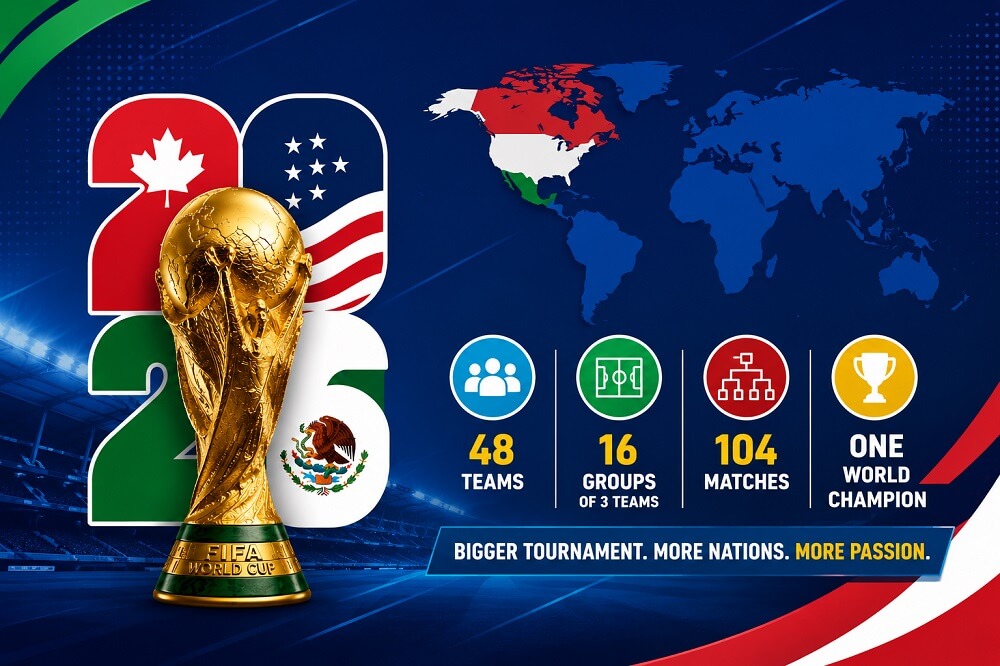
A total of 48 national teams will participate.

Previous tournaments featured 32 teams.

The expansion adds 16 additional nations.

Why Is This Significant?

More teams means:

  • More matches
  • More stories
  • More fans
  • More opportunities for emerging football nations
  • Several countries that previously struggled to qualify now have a realistic chance.

How Will The Group Stage Work?

The group stage remains the first phase of the tournament.

How Many Groups Will There Be?

The 48 teams will be divided into 12 groups of 4 teams each.

Every team plays three group matches.

How Are Points Awarded?

Teams receive:

  • 3 points for a win
  • 1 point for a draw
  • 0 points for a loss

This system remains unchanged.

How Do Teams Advance To The Knockout Stage?

Qualification from the group stage is slightly different from previous World Cups.

Who Advances?

The following teams move forward:

  • Top two teams from each group
  • Eight best third placed teams

This creates a Round of 32.

Why Is This Important?

More teams remain in contention longer.

The competition becomes more unpredictable.

Every point becomes valuable.

What Happens If Teams Finish Level On Points?

Several tiebreakers may be used.

Common Tiebreakers Include

  • Goal difference
  • Goals scored
  • Head to head results
  • Fair play record

Small details can determine qualification.

What Is The Knockout Stage Format?

After the group stage, the tournament enters elimination football.

Round Of 32

32 teams remain.

One loss means elimination.

Round Of 16

The strongest teams continue.

Pressure increases significantly.

Quarterfinals

Only eight nations remain.

Every match becomes historic.

Semifinals

The final four teams compete for a place in the championship match.

Final

Two nations battle for football’s most prestigious trophy.

How Many Matches Will Be Played?

The expanded format increases the number of games substantially.

Why More Matches Matter

Benefits include:

  • More entertainment
  • Greater revenue
  • More opportunities for players

Fans will enjoy more World Cup football than ever before.

How Do Nations Qualify For FIFA World Cup 2026?

Qualification takes place through regional competitions.

FIFA Confederations

Qualification spots are distributed among:

  • Europe
  • South America
  • North America
  • Africa
  • Asia
  • Oceania

Each confederation receives a specific number of places.

Which Regions Benefit Most From Expansion?

Several regions gain additional qualification spots.

Major Winners Include

  • Africa
  • Asia
  • North America

More countries from these regions will appear at the World Cup.

Could The Expanded Format Create More Upsets?

Very likely.

World Cups already produce surprises.

The expanded structure creates even more opportunities.

Why Do Upsets Happen?

Factors include:

  • Tournament pressure
  • Injuries
  • Tactical differences
  • Momentum

Football remains wonderfully unpredictable.

Does The New Format Favor Strong Teams?

In some ways, yes.

More knockout rounds provide elite teams additional opportunities to recover from early setbacks.

However, it also creates more opportunities for surprises.

What Matters Most?

Successful teams typically possess:

  • Squad depth
  • Tactical flexibility
  • Experience
  • Consistency

These qualities become even more important in longer tournaments.

How Important Is Squad Rotation?

Very important.

More matches create additional physical demands.

Why Does Rotation Matter?

Rotation helps teams manage:

  • Fatigue
  • Injuries
  • Suspensions

Deep squads often gain an advantage.

Could The New Format Change Tournament Strategy?

Absolutely.

Coaches must think differently.

Strategic Considerations Include

  • Player workload
  • Group stage management
  • Knockout preparation

Tournament planning becomes even more complex.

What Should Fans Expect?

Expect:

  • More football
  • More nations
  • More excitement
  • More surprises
  • More unforgettable moments

The expanded tournament promises a unique World Cup experience.

Final Thoughts

FIFA World Cup 2026 introduces the most significant format change in modern World Cup history.

Forty eight teams.

Twelve groups.

A Round of 32.

More matches than ever before.

The goal remains unchanged.

Win the World Cup.

For fans, the expanded tournament promises more drama, more stories, and more opportunities for history to be made.

FAQS

How many teams will play in FIFA World Cup 2026?

FIFA World Cup 2026 will feature 48 teams, making it the largest World Cup in history.

How many groups are in FIFA World Cup 2026?

The tournament will feature 12 groups of 4 teams each.

How do teams qualify for the knockout stage?

The top two teams from each group plus the eight best third placed teams advance to the Round of 32.

Why was the World Cup expanded?

The expansion allows more nations to participate and increases global representation.

What is the biggest change in FIFA World Cup 2026?

The increase from 32 to 48 teams is the biggest change in tournament history.

FIFA World Cup 2026 Complete Tournament Guide: Everything Fans Need To Know

The FIFA World Cup is the biggest event in football.

Every four years, the world’s best national teams compete for the most prestigious trophy in the sport. The FIFA World Cup 2026 is expected to be one of the largest and most exciting editions in history.

For the first time, three countries will host the tournament together. More teams will participate. More matches will be played. More fans will attend.

Everything about FIFA World Cup 2026 is bigger.

This guide covers everything fans need to know before kickoff.

What Is FIFA World Cup 2026?

FIFA World Cup 2026 is the 23rd edition of the FIFA World Cup.

The tournament will bring together the best national football teams from around the world to compete for the championship.

Millions of fans are expected to travel across North America while billions more will watch from home. Football enthusiasts can also stay updated with match insights, schedules, and sports-related content on play99exch.

The event represents the highest level of international football competition.

For official tournament updates and announcements, fans can follow FIFA Official Website.

Which Countries Are Hosting FIFA World Cup 2026?

For the first time in tournament history, three nations will share hosting responsibilities.

The host countries are:

  • United States
  • Canada
  • Mexico

This creates a truly continental event.

Fans will experience different cultures, cities, and stadiums throughout the competition.

Why Is FIFA World Cup 2026 Different?

Several major changes make this tournament unique.

Expanded Tournament Format

For the first time, the World Cup will feature 48 teams.

Previous editions included 32 teams.

The expanded format creates:

  • More matches
  • More nations
  • More opportunities for emerging football countries
  • Greater global representation

This is the biggest World Cup ever staged.

How Many Teams Will Compete?

A total of 48 nations will qualify.

This expansion allows more regions to send teams to the tournament.

Benefits Of Expansion

The new format provides:

  • Increased competition
  • More diversity
  • Additional qualification opportunities
  • Greater worldwide interest

Many countries now have a realistic path to World Cup participation.

Why Is The FIFA World Cup So Important?

Winning the World Cup is the ultimate achievement in football.

Club trophies are prestigious.

The World Cup is different.

Players represent their countries, their supporters, and their football history.

What Makes The World Cup Special?

Key reasons include:

  • Global audience
  • National pride
  • Historic moments
  • Legendary players
  • Unique atmosphere

No sporting event attracts attention on the same scale.

Which Teams Are Expected To Challenge For The Trophy?

Several nations enter every World Cup as contenders.

Traditional Favorites

Teams often mentioned include:

  • Brazil
  • Argentina
  • France
  • England
  • Spain
  • Germany
  • Portugal

Each nation possesses world class talent and championship ambitions.

Could There Be Surprise Teams?

Every World Cup produces unexpected stories.

Underdogs regularly exceed expectations.

Why Do Surprises Happen?

Factors include:

  • Tournament pressure
  • Injuries
  • Momentum
  • Tactical innovation
  • Emerging talent

Football remains one of the most unpredictable sports.

Which Players Could Dominate The Tournament?

World Cups often create legends.

The biggest stars will arrive hoping to leave a lasting legacy.

What Makes A Great World Cup Player?

Successful players usually possess:

  • Confidence
  • Consistency
  • Leadership
  • Big match mentality

The brightest stars often shine on the biggest stage.

How Important Are Host Nations?

Host countries traditionally enjoy advantages.

Why Does Hosting Matter?

Benefits include:

  • Familiar conditions
  • Fan support
  • Reduced travel
  • Greater comfort

Host nations frequently perform better than expected.

What Role Will Stadiums Play?

Different venues create different challenges.

Factors include:

  • Weather
  • Crowd atmosphere
  • Pitch quality
  • Travel demands
  • Teams must adapt quickly.

The most adaptable nations often progress furthest.

Could FIFA World Cup 2026 Break Records?

Very likely.

The expanded format creates opportunities for new milestones.

Potential records include:

  • Attendance
  • Goals scored
  • Television audiences
  • Match participation

This tournament could redefine several World Cup benchmarks.

What Should Fans Expect?

Fans should expect:

  • Dramatic matches
  • Surprise results
  • Emerging stars
  • Historic moments
  • Passionate support

The World Cup consistently delivers unforgettable memories.

Final Thoughts

FIFA World Cup 2026 promises to be one of the most significant tournaments in football history.

A larger field.

Three host nations.

More matches.

More opportunities.

The world’s best players and teams will gather in North America with one goal.

Lift football’s most prestigious trophy.

FAQs

Where will FIFA World Cup 2026 be held?

The tournament will be hosted by the United States, Canada, and Mexico.

How many teams will play in FIFA World Cup 2026?

A total of 48 teams will participate in the expanded tournament.

Why is FIFA World Cup 2026 unique?

It is the first World Cup hosted by three countries and the first to feature 48 teams.

Who are the favorites to win FIFA World Cup 2026?

Brazil, Argentina, France, England, Spain, Germany, and Portugal are expected to be among the contenders.

What makes the FIFA World Cup special?

The World Cup combines global competition, national pride, and the highest level of international football.


play99exch